
Flow Tribe
is an American funk rock band based in New Orleans, Louisiana. The group contains six members who are all natives of New Orleans. The band was founded in 2004, and was featured on Episode 11 of MTV’s The Real World: New Orleans, which aired September 8, 2010. Wikipedia

-
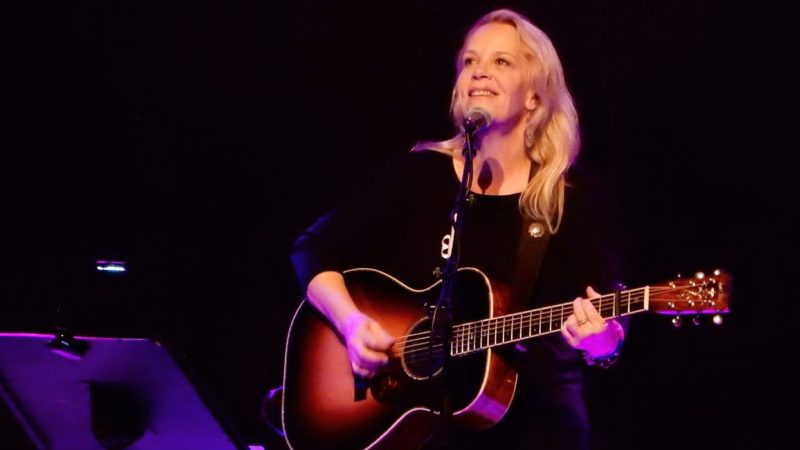
Mary Chapin Carpenter
Mary Chapin Carpenter
Mary Chapin Carpenter (born February 21, 1958 in Princeton, New Jersey) is a highly successful country music singer, guitarist, and songwriter. According to Songfacts, Carpenter had a fairly privileged upper middle class upbringing. Her father was at least partly responsible for her embarking on a musical career. The song “House of Cards” was inspired by the divorce of her parents when she was sixteen.
One of her most widely known singles is “Passionate Kisses” (written by fellow singer-songwriter Lucinda Williams), a song with a rock flavor musically and lyrics listing simple desires such as “a comfortable bed”, “food to fill me up”, and “time to think”. Another big hit was “Down at the Twist and Shout“, which she performed in January 1997 at Super Bowl XXXI in New Orleans.
A number of Mary Chapin Carpenter’s songs speak to women, urging them on through hard times or troubled relationships. In “He Thinks He’ll Keep Her“, co-composed by Carpenter and Don Schlitz, the singer makes the case for strength and self-respect. Another common theme in her music is that of taking life at your own pace, rather than rampant goal-driven materialism, such as “The Long Way Home” from her 2001 album Time*Sex*Love, which pokes fun at a man who “retire(s) at thirty to his big-ass house next to the putting green.” The album has a relatively different feel musically, incorporating elaborate orchestra melodies, but with her characteristic lyrical depth.
Her album Between Here and Gone, was released in 2004.
Carpenter’s 2007 album, The Calling, on Rounder Records’ rock/pop imprint Zoë, features commentary about contemporary politics, a reaction to the impact of Hurricane Katrina on a track entitled “Houston,” and an incendiary track entitled “On with the Song“, dedicated to the Dixie Chicks, and addressing the visceral reaction to the trio. In less than three months after its release, The Calling sold more than 100,000 copies in the US.
Carpenter has won five Grammy Awards and is the only artist to have won four consecutive Grammy Awards for Best Female Country Vocal Performance, which she received from 1992 to 1995. On October 7, 2012, Carpenter was inducted into the Nashville Songwriters Hall of Fame.
Carpenter is a fifth cousin of the late singer and humanitarian Harry Chapin, along with his brothers Tom Chapin and Steve Chapin.
John Jennings

Long Time Guitarist, Producer,
Collaborator
John Jennings
R.I.P.Editor Note: The wonderful video of Down at the Twist and Shout was filmed at the Spanish Ballroom, Glen Echo Park, Glen Echo, Md. Take note of both John Jennings and Pete Kennedy on guitar and the wonderful BeauSoleil. Also special because I was there.
-
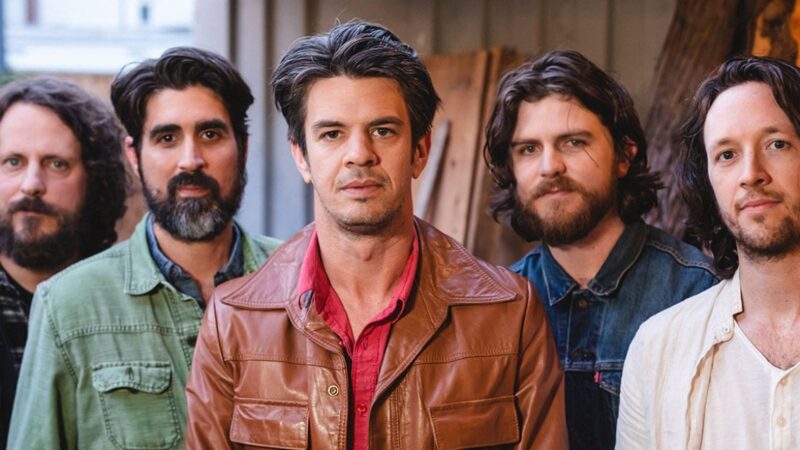
Band of Heathens
Band of Heathens
Performance Video — Heaven Help Us All
When The Band of Heathens decided to dub their sixth studio album of original material Stranger (its first since 2017’s Duende), the veteran band, formed in Austin, TX nearly 15 years ago, had no idea how prophetic that title would turn out to be. Although the name references the famed existential Albert Camus novel and Robert Heinlein’s sci-fi classic Stranger in a Strange Land, it also touches on the “strangers” who make up the band’s loyal fan base, who supported the band during this period with all touring canceled.
As co-founder Ed Jurdi acknowledges, it is certainly an unusual time to release a new album. “The strangest,” he says. “Maybe no time stranger. Since we started, there have been sweeping, revolutionary changes in the music business, but, in this global pandemic, we’re just a microcosm.”
“We’re really fortunate that we have been able to turn directly to our fan base during the pandemic,” adds fellow co-founder Gordy Quist. “The last few months we’ve spent four nights a week live-streaming personal private concerts to fans, and one night a week publicly live-streaming with the whole band Zooming in from their respective homes in California, Texas, North Carolina and Tennessee. At first it seemed very strange until
these walls started coming down and we realized how connected we are by the fabric of music.”Extending the metaphor of Stranger even further. The Band of Heathens traveled to another city, Portland, OR, with a brand-new producer, Tucker Martine [The Decemberists, My Morning Jacket, Modest Mouse, Camera Obscura], and the result is something different – a more airy, intimate atmosphere, with added emphasis on songcraft and intricate arrangements set in a spacious sonic landscape that reinvents the band’s sound. These are songs stripped of pretense, but teeming with the emotion borne of personal experience, as has been The Band of Heathens’ method from the very start. Stranger moves off into a new place, but still echoes the group’s artful songwriting and multi-layered narrative observations.
The Stranger was released in 2020 and is a top ten roots rock album riding high in the charts.
-
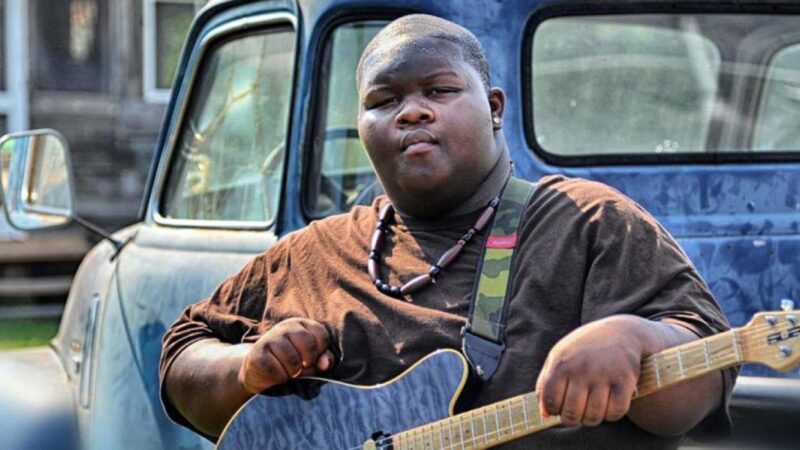
Christone Kingfish Ingram
“Kingfish”
Christone “Kingfish” Ingram is a Grammy Award-winning blues guitarist and singer from Clarksdale, Mississippi, who is celebrated for reinvigorating the blues for a new generation. He began his musical journey at the Delta Blues Museum, mastering multiple instruments as a child before focusing on the guitar. Blending traditional Delta and Chicago blues with modern blues-rock, soul, and gospel, his music captivates audiences with its passion and technical skill.
Ingram quickly rose to prominence as a teenager, garnering millions of views for his YouTube performances, appearing in the Netflix series Luke Cage, and performing at the White House. His 2019 debut album, Kingfish, earned a Grammy nomination and shot to the top of the Billboard Blues Chart. His 2021 follow-up, 662—named for his Mississippi Delta area code—secured a Grammy Award for Best Contemporary Blues Album. His live performances are also critically acclaimed, with NPR noting he is “even scarier live”.
A prolific artist, Ingram has performed alongside musical legends like Buddy Guy, who has called him “the next explosion of the blues,” and even opened for The Rolling Stones. In 2024, Ingram launched his own label, Red Zero Records, and released his studio album, Hard Road. As a multi-instrumentalist with a powerful voice, Ingram continues to push the boundaries of the genre while honoring its rich history.
