
Taj Mahal
In September 2014, some 50 years after moving to Los Angeles to form the band Rising Sons with fellow blues musician Ry Cooder and Jessie Lee Kincaid, Taj Mahal hightailed it to Nashville to receive an honor he called “one of the most powerful and wonderful things that could ever happen in my life.” Celebrating decades of recording and touring that have nearly singlehandedly reshaped the definition and scope of the blues via the infusion of exotic sounds from the Caribbean, Africa and South Pacific, the two-time Grammy winning singer, songwriter, film composer, guitarist and multi-instrumentalist was feted with the Lifetime Achievement for Performance Award at the 13th Annual Americana Honors and Awards.

-

The Boneshakers
The Boneshakers w/Jenny Langer
The iconic band lead by world-renowned guitarist Randy Jacobs of Was (Not Was). The Boneshakers and members have toured and recorded with Bonnie Raitt, BB King, Seal, Keb Mo, Aretha Franklin, Elton John, Mindi Abair, Bootsy Collins, Tears 4 Fears, Bob Dylan, Stevie Wonder, Iggy Pop…just to name a few. STORIED CAREER Flashback to 1980 — During his maiden session for Don and David Was, Randy Jacobs meets Sweetpea Atkinson on a cold night in the Motor City at Sound Suite Studio (the recording home of the fledgling band Was (Not Was). The connection was immediate and a bond was forged between the two artists. Their combined talents would help Was (Not Was) become a successful act during the 80’s and into the early 90s culminating with the worldwide hit “Walk The Dinosaur ” co-written by Jacobs. After their European tour with Dire Straits in 1992, the Was Band went on hiatus and Randy started playing and recording with the likes of Bonnie Raitt, BB King, Seal, Paula Abdul, Kris Kristofferson, Ofra Haza, Tears For Fears, Warren Hill and others. Sweetpea was in Los Angeles adding background vocals to artists like Neil Diamond, Bonnie Raitt, Keb Mo, and Bob Segar. When Atkinson heard that Jacobs was putting together a new project, he jumped at the chance to be a part of it. It was Bonnie Raitt who inadvertently gave them their name “Boneshakers” while they were working on her “Longing In Our Hearts” CD. In 1996, the two were signed to Pointblank/Virgin Records and produced two CDs for the label: “Book Of Spells” (1997) which included Randy’s rockin’ swing arrangement of James Brown’s “Cold Sweat” and the powerful “Shake The Planet” (1998). Over the years, The Boneshakers released another four successful albums. Additionally, they joined forces with sax queen Mindi Abair and released Live in Seattle on Concord Records. Two more albums were credited to Mindi Abair and The Boneshakers: The EastWest Sessions (2017) and All I Got for Christmas Is the Blues (2018).
In 2020, the band suffered an unimaginable loss with news of the passing of Sweetpea. THE LEGACY CONTINUES Now in 2022, as The Boneshakers celebrate the 25th anniversary of their first release, a new energy and excitement has emerged. Producer John Wooler, who originally signed The Boneshakers in 1997, connected Randy and the incredible Jenny Langer– a powerhouse singer who was inducted into the Blues Hall of Fame (NYC and VA) at the age of 28 and won the 2020 Int’l Blues Challenge for Best SelfProduced Album. What started as a few tracks for her project quickly morphed in a new album with The Boneshakers featuring no-holds-barred funk, blues, and rock that marries the sounds and spirits of Detroit Rock City, Memphis, and Mussel Shoals. Produced by Wooler, it is back to the original vision of The Boneshakers’ fiery sound, with the vocal dynamo Jenny Langer behind the mic and original musicians from “The Book Of Spells” Sergio Gonzales (Drums), Nathan Brown (Bass), Jon Gilutin (Keys), The Texacali Horns (Joe Sublett, Mark Pender, and Randy’s former band mate from Was (Not Was) Sir Harry Bowens on vocals.
BAND MEMBERS:
Randy Jacobs (Guitar/Vocals)
Holly Montgomery (Bass/Vocals)
Arthur Thompson (Drums/vocals)
Jenny Langer (Vocals) -
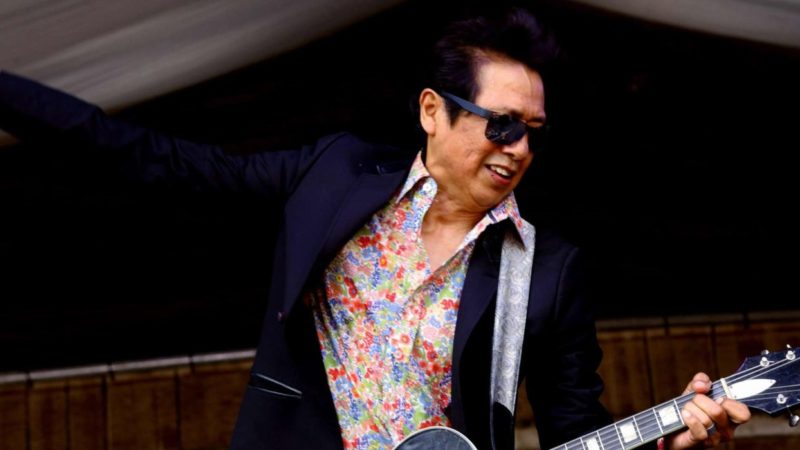
Alejandro Escovedo
“Simply one of the finest singer-songwriters of his generation, Alejandro Escovedo’s critical cachet has always outstripped his name recognition and commercial impact.” — Slant
-

Southern Avenue
Southern Avenue is a dynamic, Grammy-nominated blues and soul band from Memphis, Tennessee, celebrated for carrying the Southern soul legacy into the 21st century. The band’s formation is a story of serendipity, bringing together diverse backgrounds to create a sound that is both deeply traditional and refreshingly modern. The band is most notably composed of Israeli-born guitarist Ori Naftaly and the Memphis-native Jackson sisters: powerhouse lead vocalist Tierinii, drummer and vocalist Tikyra “T.K.,” and percussionist, violinist, and vocalist Ava.
The group formed in 2015 and quickly made a name for themselves, reaching the finals of the prestigious International Blues Challenge in 2016. This rapid success led to a historic signing with the newly reactivated Stax Records—the first time in 40 years a Memphis band had been signed to the legendary soul label. Taking their name from a Memphis street running to the original home of Stax Records, Southern Avenue proved to be a fitting choice to represent the city’s rich musical heritage.
Their self-titled debut album in 2017 received critical acclaim and earned them the “Best Emerging Artist Album” award from the Blues Foundation. The album’s success fueled a rigorous touring schedule across the US, Europe, and Australia, allowing them to cultivate a devoted fanbase and hone their electrifying live performance. Their follow-up album, Keep On, released in 2019, featured more pronounced funk influences and earned them a Grammy nomination for “Best Contemporary Blues Album”.The band’s musical style is a seamless and spirited blend of genres. The foundation is rooted in gospel music, a heritage brought by the Jackson sisters, whose natural harmonies and soulful delivery give the band its core spiritual sound. Tierinii’s vocals, often compared to the confident and gutsy style of Chaka Khan, are a magnetic force that energizes audiences. This soulful intensity is paired with Naftaly’s intricate, raw guitar work, which he brought to Memphis after immigrating from Israel in search of authentic blues. The result is a gritty, infectious, and contemporary take on American roots music.Beyond their captivating sound, Southern Avenue is known for their uplifting and message-driven songs. Their music aims to transmute negative feelings into a sense of freedom and jubilation, creating a powerful and positive connection with their listeners. This ethos extends to their live shows, which are praised as dynamic and inclusive experiences that celebrate the communal power of music. The band’s latest album, Family, released in 2025 on Alligator Records, was recorded at Memphis’s historic Royal Studios and continues their tradition of crafting universal, heartfelt songs that bring people together.Southern Avenue’s journey from a serendipitous meeting to a Grammy-nominated act is a testament to their talent and hard work. They have successfully blended traditional Memphis sounds with a fresh, modern perspective, establishing themselves as a vital voice in blues and soul music today.
