
Nicholas “Nick” Drain Lowe, is an English singer-songwriter, musician and producer. A noted figure in power pop and new wave, Lowe has recorded a string of well-reviewed solo albums. Along with vocals, Lowe plays guitar, bass guitar, piano and harmonica. Wikipedia
Nick Lowe has made his mark as a producer (Elvis Costello-Graham Parker-Pretenders-The Damned), songwriter of at least three songs you know by heart, short-lived career as a pop star, and a lengthy term as a musicians’ musician. But in his current ‘second act’ as a silver-haired, tender-hearted but sharp-tongued singer-songwriter, he has no equal.
Starting with 1995′s ‘The Impossible Bird’ through to 2011′s ‘The Old Magic,’ Nick has turned out a fantastic string of albums, each one devised in his West London home, and recorded with a core of musicians who possess the same veteran savvy. Lowe brings wit and understated excellence to every performance, leading Ben Ratliff of the New York Times to describe his live show as “elegant and nearly devastating.”

-
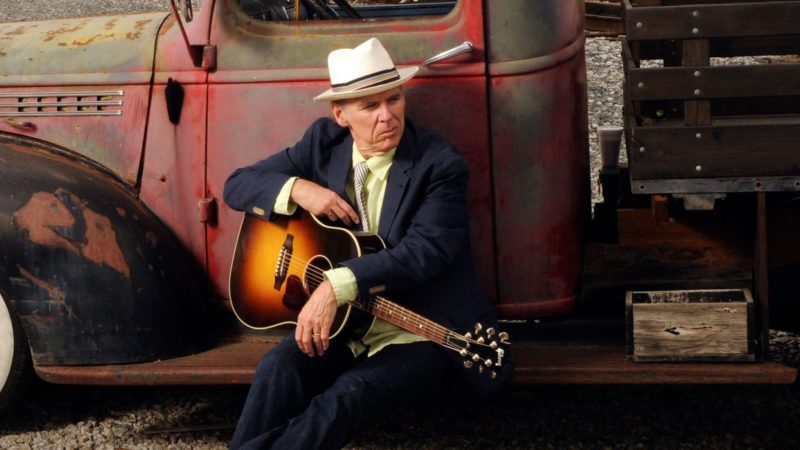
John Hiatt
John Robert Hiatt is an American singer-songwriter and musician. He has played a variety of musical styles on his albums, including new wave, blues, and country. Hiatt has been nominated for nine Grammy Awards and has been awarded a variety of other distinctions in the music industry.
COUNTRY MUSIC HALL OF FAME® AND MUSEUM TO FEATURE JOHN HIATT AS NEXT POETS AND PROPHETS HONOREE
NASHVILLE, Tenn. – July 9, 2024 – The Country Music Hall of Fame® and Museum will feature singer-songwriter John Hiatt in the next installment of its in-depth interview series Poets and Prophets. The series features songwriters who have made significant contributions to country music. The program will take place on Saturday, Aug. 10, at 2:30 p.m. in the museum’s Ford Theater and is included with museum admission.
Throughout his 50-year recording career, Hiatt has established himself as one of the most acclaimed singer-songwriters of his generation, as well as a hit composer for country and rock artists alike. Bob Dylan, Bruce Springsteen and Country Music Hall of Fame members Emmylou Harris and Willie Nelson are among the artists who have covered his acerbic, soul-stirring songs.
Hiatt began his professional songwriting career at age 18, when he moved to Nashville to work at Tree Publishing. Over the next two decades, his songs became hits for Rosanne Cash (“The Way We Make a Broken Heart”), the Desert Rose Band (“She Don’t Love Nobody”) and Three Dog Night (“”Sure as I’m Sittin’ Here”). Hiatt found success as a recording artist with his landmark 1987 album, Bring the Family, which featured “Have a Little Faith in Me” and “Memphis in the Meantime,” among other enduring songs. In its wake, he went from earning cuts to being covered by some of music’s biggest names, including Bonnie Raitt (“Thing Called Love”) and B. B. King and Eric Clapton (“Riding with the King”).
Following a stint in Los Angeles, Hiatt returned to Nashville in the mid-1980s and has continued to write, perform and record. He has released more than two dozen albums, most recently 2021’s Leftover Feelings, a highly regarded collaboration with the Jerry Douglas Band, recorded at historic RCA Studio B. In 2008, Hiatt was inducted into the Nashville Songwriters Hall of Fame and received a lifetime achievement award for songwriting from the Americana Music Association. In 2019, he became the third recipient of the BMI Troubadour Award, which recognized his work as a songwriter.
-

Hot Tuna/Jorma Kaukonen & Jack Casady
Jorma & Jack (aka Hot Tuna)
Hot Tuna is an American blues band formed in 1969 by former Jefferson Airplane members Jorma Kaukonen and Jack Casady. Although it has always been a fluid aggregation, with musicians coming and going over the years, the band’s name has essentially become a metonym for Kaukonen and Casady’s ongoing collaboration. Wikipedia
Don’t miss Hesitation Blues -circa 1970
-

Tom Rush
Tom Rush
Tom Rush is a gifted musician and performer, whose shows offer a musical celebration…a journey into the tradition and spectrum of what music has been, can be, and will become. His distinctive guitar style, wry humour and warm, expressive voice have made him both a legend and a lure to audiences around the world. His shows are filled with the rib-aching laughter of terrific story-telling, the sweet melancholy of ballads and the passion of gritty blues. (website)
Interview – Over 55 years of recording and performing
