
Lyle Lovett
Lyle Pearce Lovett is an American singer, songwriter, actor and record producer. Active since 1980, he has recorded 13 albums and released 25 singles to date, including his highest entry, the number 10 chart hit on the U.S. Billboard Hot Country Songs chart, “Cowboy Man”. Wikipedia

-

Delbert McClinton
Delbert McClinton
Rolling Stone calls him the “Godfather of Americana Music,” and rightfully so. Delbert’s musical style grew from his Texas roots. A little Tejano. A little Bob Wills. Throw in some Jimmy Reed harmonica. Add a splash of Big Joe Turner, and a big band horn section. He has also been nominated for Grammys in the Country category, and has been featured in media from the Los Angeles Times to the Washington Post. He has developed a sound that continues to serve him well, as evidenced by the three Grammy Awards for Contemporary Blues on his mantel.
Born in Lubbock, raised in Fort Worth, and now with homes in Austin, Nashville, and San Miguel de Allende, Delbert recognizes that he has been One Of The Fortunate Few. He grew up with a backstage pass to some of the most significant moments in American culture and music history.
From his early Fort Worth bands, the Straitjackets and the Rondels, to his current band, Self‑Made Men + Dana, he continues to play sold‑out concert halls and dance halls, historical theatres and music festivals across the nation. A major player in several waves of the national surge of Texas music popularity, Delbert has performed multiple times on Saturday Night Live, has been featured on Austin City Limits seven times, as one of the most celebrated guests on the popular series; and appeared on many other national television shows.
His career truly defines Americana music: Delbert’s unique story of American history – with big horns, a strong rhythm section and a hot harmonica lead. To borrow from one of the songs on Tall, Dark & Handsome, whether he’s doing a live show or a recording, you can be assured that Delbert McClinton “don’t leave no chicken on the bone.”
-

Bruce Cockburn
Bruce Cockburn
Bruce Douglas Cockburn OC is a Canadian singer-songwriter and guitarist. His song styles range from folk to jazz-influenced rock and his lyrics cover a broad range of topics including human rights, environmental issues, politics, and Christianity. Wikipedia
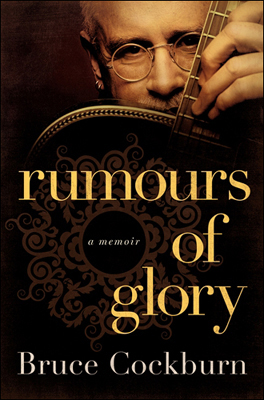
RUMOURS OF GLORY– a chronicle of faith, fear, and activism, and a lively cultural, political, and musical tour through the past five decades.
Best known for his memorable songs including ‘Pacing the Cage’ (1995), ‘If a Tree Falls’ (1988), ‘If I Had a Rocket Launcher’ (1984), ‘Lovers in a Dangerous Time’ (1984) and ‘Wondering Where the Lions Are’ (1979), the award-winning songwriter and pioneering guitarist, whose life and music has been shaped by politics, protest, romance, and spiritual discovery, has released 31 albums spanning five decades.
Cockburn’s albums have sold over 7 million copies worldwide. He is revered by fans and fellow musicians alike as one of the most important songwriters of his generation.
-

Eilen Jewell
From: Bernard Zuel – Music Journalist
FULL DISCLOSURE: WHY THE RULES HAVE CHANGED FOR EILEN JEWELL
MAYBE IT’S THE MIDWEST UPBRINGING of politeness and reserve that lay behind it. Maybe it’s the natural defence of someone who already was out and exposed as an artist in a corner of Americana that values the personal as much as the historical. Whatever it might be with Eilen Jewell, in about 13 years of interviewing her, she has always shown herself adept at talking about her songs and her life in a way that deflected personal revelations.
It’s not that she didn’t answer questions, but those answers made the generalities of her characters the focal point and gave just enough to let us see how she’d build relationships to them but not be defined by them. It was politely done of course, and was not without things to chew on given a sharp intelligence and an eye on American culture whether it was her love of Loretta Lyn and Howlin’ Wolf, the pay gap between the sexes, or political resistance as something of a progressive island in a state that’s anything but.
Well, things have changed with the coming record, Get Behind The Wheel. Not only has Jewell written an album that came out of the Covid-era breakup of her marriage to long-time drummer, co-manager, and co-parent, Jason Beek, and some deaths in her wider family, but she has been talking openly, frankly, about her circumstances.
It’s hard to imagine that was a comfortable transition, not least because growing up in Idaho you kept your business to yourself, but you have to wonder if it has been dragged out of her, or did she feel it was inevitable and stopped fighting.
“It is really new for me to talk about anything having to do with my personal life,” the Boise-based Jewell says. “But this time around it seemed like it would be wrong to not discuss it because this album is so, so directly influenced by everything that I’ve gone through in the past couple of years. I just feel like I would be lying if I said ‘oh, I don’t know, it’s just about people and things’ [she laughs].
“Also the pandemic taught me that that there’s something really important about sharing parts of ourselves. That’s what sharing my music is [and] I guess it dawned on me this actually could be a good thing for me, it could open me up to my fans and there’s a chance there could be some cathartic sharing on both sides.”
There probably won’t be any problems getting her fans to share their thoughts next month when she will spend several weeks in Australia (heaven knows we’re not a quiet bunch), but when you put these things out like Jewell is now doing, not only are you exposing yourself but you are setting the agenda for how things are interpreted. And this is before even considering that Beek is still playing in her band and will be on the tour.
How people interpret your songs and your album, and inevitably yourself, will be shaped by these revelations and explanations. Is that a good thing? Was it even planned?
“The label was saying you’ve got to figure out how to talk about this new album, so I was like, yeah, shoot, I’ve gotta decide how much do I want to disclose? How much do I want to set the stage for these songs?,” she says. “Because, yeah, in the past I’ve not done that and thought that the songs should stand on their own and people can interpret them how they want. People are still free to interpret them however, obviously, but this album really did occur at a particular point in time for me. It was a disaster of a moment in my life this album was born out of, beyond anything else I’ve ever experienced, and I felt this album deserved an exception to my normal rule.” It was time? At 43, maybe it’s as simple as that.
“I guess I do want to talk about this stuff, this stuff being the pandemic, the divorce that came out of that, or coincided with it, and then family losses, people near and dear to me – not even Covid-related, but just one after another,” Jewell says. “For the first time in my life it feels cathartic to talk about what was going on behind the scenes. I don’t think it’s necessary information to appreciate the album, but there’s a few Neil Young albums where I gleaned he was going through a particular thing in his life and then read later that in fact, yes that’s happening, and something about that makes me appreciate the album just a little bit more. I have a sense of who he is more.”
From a long low base of knowledge about the album so far – it’s not yet available to media, let alone the public, though we will hear some songs from it at her March shows – a title like Get Behind The Wheel suggests maybe taking control of her life, or at least setting the direction. How did she handle this resetting and reclaiming of control?
“It’s really been a mixed bag,” she confesses. “I think when I wrote that song – the song that contains that phrase ‘get behind the wheel’ is called Alive – I felt so inspired to take control and have agency, it was all very new. I was like, well, so much is crashing down around me but this is an opportunity to just up inside my life in a really authentic way. And that’s still present, but I’m also realising that it’s much harder than it sounds, and sometimes [she laughs ruefully] it’s awful.” No one would blame her for looking away.
“There’s part of me that would just love to drift around and say ‘I don’t know, someone else take the wheel: I’m getting tired already’,” says Jewell. “But I was guilty of some of that for many years, going with the flow with my career, and my personal life too … being cooperative, and they really comes at a cost eventually. You can’t keep whittling your life away like that. Eventually you realise that your heart is not fully in it, and there’s always a reckoning with that.” When she looks at who she was, even three years ago, and who she is now, how does she judge that person?
“I … think … that … person … was … somewhat,” she says slowly, before a long pause. “Somewhat overeager to find distractions. The old me really didn’t want to look at life just as it is. The old me was always kind of looking into the future, thinking about how things will be better or should be better, or the past. The here and now was something that I tended to avoid. “But all we really have is the here and now. The past is gone and the future is a fantasy.”
