
Amy Rigby
Amy Rigby has made a life out of writing and singing about life. With bands Last Roundup and the Shams in eighties NYC East Village to her solo debut Diary Of A Mod Housewife out of nineties Williamsburg; through a songwriting career in 2000s Nashville and during the past decade with duo partner Wreckless Eric, she’s released records on visionary independent labels Rounder, Matador, Signature Sounds and reborn Stiff Records as well as her and Eric’s own Southern Domestic Recordings. The Old Guys, her first solo album in a dozen years, measures the weight of heroes, home; family, friends and time. Philip Roth and Bob Dylan, CD/cassette players, touring, the wisdom of age and Walter White, groupies, Robert Altman, egg creams and mentors are paid tribute. Twelve songs written by Amy and recorded by Wreckless Eric in upstate New York, The Old Guys is the sound of a good girl grown up, never giving up.
Now a memoir joins her music. Girl to City, out now.

-
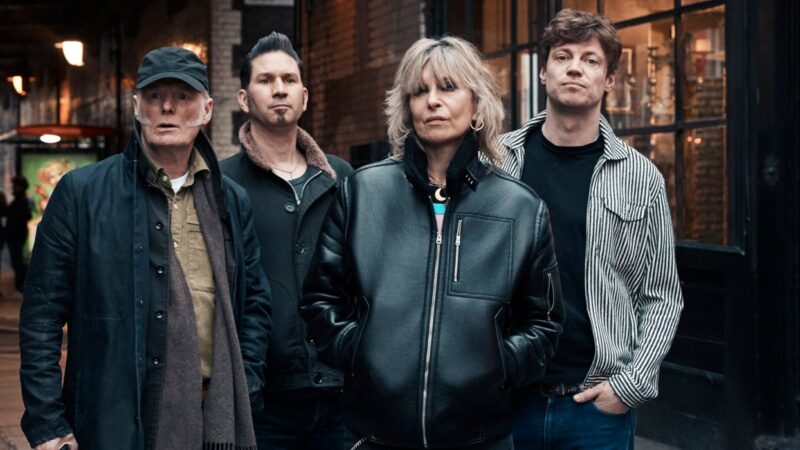
The Pretenders/Chrissie Hynde
The Pretenders/Chrissie Hynde
Over the years, the Pretenders became a vehicle for guitarist/vocalist Chrissie Hynde’s songwriting, yet they were a full-fledged band when they formed in the late ’70s. With their initial records, the group crossed the bridge between punk/new wave and Top 40 pop more than any other band, recording a series of hard, spiky singles that were also melodic and immediately accessible. Hynde was an invigorating singer who bent the traditional male roles of rock & roll to her own liking, while guitarist James Honeyman-Scott created a sonic palette filled with suspended chords, effects pedals, and syncopated rhythms that proved remarkably influential over the next two decades. After Honeyman-Scott’s death, the Pretenders became a straightforward rock band, yet Hynde’s semi-autobiographical songwriting and bracing determination meant that the group never became just another rock band, even when their music became smoother and pop-oriented.
Originally from Akron, Ohio, Hynde moved to England in the early ’70s, when she was in her twenties. British rock journalist Nick Kent helped her begin writing for New Musical Express; she wrote for the newspaper during the mid-’70s. She also worked in Malcolm McLaren’s SEX boutique before she began performing. After playing with Chris Spedding, she joined Jack Rabbit; she quickly left the band and formed the Berk Brothers.
In 1978, Hynde formed the Pretenders, which eventually consisted of Honeyman-Scott, bassist Pete Farndon, and drummer Martin Chambers. Later in the year, they recorded a version of Ray Davies’ “Stop Your Sobbing,” produced by Nick Lowe. The single made it into the British Top 40 in early 1979. “Kid” and “Brass in Pocket,” the group’s next two singles, were also successful. Their debut album, Pretenders, was released in early 1980 and eventually climbed to number one in the U.K. The band was nearly as successful in America, with the album reaching the Top Ten and “Brass in Pocket” reaching number 14.
During an American tour in 1980, Hynde met Ray Davies and the two fell in love. Following a spring 1981 EP, Extended Play, the group released their second album, Pretenders II. Although it fared well on the charts, it repeated the musical ideas of their debut. In June of 1982, Pete Farndon was kicked out of the band due to his drug abuse. A mere two days later, on June 16, James Honeyman-Scott was found dead of an overdose of heroin and cocaine. Pregnant with Davies’ child, Hynde went into seclusion following Honeyman-Scott’s death. In 1983, two months after Hynde gave birth, Farndon also died of a drug overdose.
Hynde regrouped the Pretenders in 1983, adding former Manfred Mann’s Earth Band guitarist Robbie McIntosh and bassist Malcolm Foster; the reconstituted band released “2000 Miles” in time for Christmas. The new Pretenders released Learning to Crawl early in 1984 to positive reviews and commercial success. Ending her romance with Ray Davies, Hynde married Jim Kerr, the lead vocalist of Simple Minds, in May of 1984.
Apart from a performance at Live Aid, the only musical activity from the Pretenders in 1985 was Hynde’s appearance on UB40’s version of “I Got You Babe.” Hynde assembled another version of the Pretenders for 1986’s Get Close. Only she and McIntosh remained from Learning to Crawl; the rest of the album was recorded with session musicians. Get Close showed the Pretenders moving closer to MOR territory, with the bouncy single “Don’t Get Me Wrong” making its way into the American Top Ten in 1987. Hynde recorded another duet with UB40 in 1988, a cover of Dusty Springfield’s “Breakfast in Bed.”
Hynde’s marriage to Kerr fell apart in 1990, the same year Packed! was released, although it failed to ignite the charts in either America or Britain. Hynde was relatively quiet for the next few years, re-emerging in 1994 with Last of the Independents, which was hailed as a comeback by some quarters of the press. The album did return the Pretenders to the Top 40, with the ballad “I’ll Stand by You.” In the fall of 1995, the live album Isle of View was released, then the group remained silent for a few years. Hynde finally returned in 1999 with an album of new material, Viva el Amor. Three years later, the Pretenders left their longtime label for Artemis. The reggae-tinged Loose Screw appeared in November and a tour followed in January 2003. In March 2006, the band released their first-ever box set, Pirate Radio, via Rhino. The four-disc package included over five hours of music and a DVD of rare performances. Two years later, the Pretenders released Break Up the Concrete, their first album in six years; it debuted at 32 on the Billboard charts and 35 in the U.K.
Following the release of Break Up the Concrete, the Pretenders spent the next few years touring, but after 2012, Hynde put the band on hiatus. In 2014, she released Stockholm, her first-ever solo album, which was followed in 2015 by her memoir Reckless: My Life as a Pretender. In 2016, Hynde revived the Pretenders to record a new album with Black Keys guitarist Dan Auerbach as producer. Alone emerged in October 2016. 2019 saw the belated release of The Pretenders with Friends, a CD, DVD, and Blu-ray package that documented both sound and images from a 2006 concert in which Hynde and her bandmates were joined on-stage by Iggy Pop, Shirley Manson of Garbage, and members of Incubus and Kings of Leon. The Pretenders reunited with producer Stephen Street for 2020’s Hate for Sale, which also was the first album since Loose Screw to feature Chambers on drums. ~ Stephen Thomas Erlewine
-

James Grippando
Location – Miami
James Grippando is a New York Times bestselling author with more than thirty books to his credit, including those in his acclaimed series featuring Miami criminal defense attorney Jack Swyteck, and the winner of the Harper Lee Prize for Legal Fiction. He is also a trial lawyer and teaches law and literature at the University of Miami School of Law. He lives in South Florida with his wife, two cats, and a golden retriever named Atlas, who has no idea he’s a dog.
Nearly three years since starring in his last book, On January 9th, 2024, Jack Swyteck returns to bookstores in Goodbye Girl, the brand new thriller from New York Times bestselling author James Grippando.
Jack Swyteck, a Miami criminal defense lawyer, first appeared in Grippando’s 1994 debut, The Pardon. Since then, he’s gone on to anchor seventeen books to date, including Grippando’s 2021 thriller, Twenty. That book, heartbreakingly timely, featured a tragic plot about a school shooting in Florida that claimed the lives of twenty innocent people. Swyteck ended up in the middle of things after his wife and daughter were present when the carnage started, and then later, after the lead suspect enlists his help in an effort to calm anti-Muslim fervor and clear his name. Now, several years later, Jack Swyteck is finally set to return.
Goodbye Girl, the eighteenth book in Grippando’s series, is said to feature a nail-biting new plot that follows a mega-star artist who takes to social media and encourages her fans to illegally download her music for reasons that reach back decades and promises to have more than a few twists and turns. The Real Book Spy
-
Playing for Change
Playing for Change Foundation
Playing For Change is a movement created to inspire and connect the world through music. The idea for this project came from a common belief that music has the power to break down boundaries and overcome distances between people.
Playing For Change was born in 2002 as a shared vision between co-founders, Mark Johnson and Whitney Kroenke, to hit the streets of America with a mobile recording studio and cameras in search of inspiration and the heartbeat of the people. This musical journey resulted in the award-winning documentary, “A Cinematic Discovery of Street Musicians.”
In 2005, Mark Johnson was walking in Santa Monica, California, when he heard the voice of Roger Ridley singing “Stand By Me.” Roger had so much soul and conviction in his voice, and Mark approached him about performing “Stand By Me” as a Song Around the World. Roger agreed, and when Mark returned with recording equipment and cameras he asked Roger, “With a voice like yours, why are you singing on the streets?” Roger replied, “Man I’m in the Joy business, I come out to be with the people.” Ever since that day the Playing For Change crew has traveled the world recording and filming musicians, creating Songs Around the World, and building a global family.
Creating Songs Around the World inspired us to unite many of the greatest musicians we met throughout our journey and form the Playing For Change Band. These musicians come from many different countries and cultures, but through music they speak the same language.Songs Around The World The PFC Band is now touring the world and spreading the message of love and hope to audiences everywhere.
The true measure of any movement is what it gives back to the people. We therefore created the Playing For Change Foundation,a separate 501(c)3 nonprofit organization dedicated to building music and art schools for children around the world, and creating hope and inspiration for the future of our planet.
No matter who you are or where you come from, we are all united through music.
Watch the embeded video -R.I.P – Robbie Robertson
Support this movement by becoming a Member , and together we will make the world a better place.
