
Walter Mosley
Walter Mosley
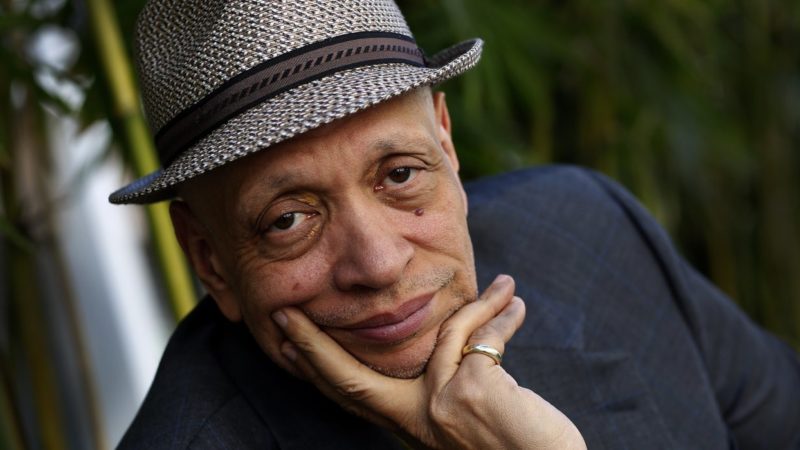
Walter Mosley is one of America’s most celebrated and beloved writers. His books have won numerous awards and have been translated into more than twenty languages.
Mosley is the author of the acclaimed Easy Rawlins series of mysteries, including national bestsellers Cinnamon Kiss, Little Scarlet, and Bad Boy Brawly Brown; the Fearless Jones series, including Fearless Jones, Fear Itself, and Fear of the Dark; the novels Blue Light and RL’s Dream; and two collections of stories featuring Socrates Fortlow, Always Outnumbered, Always Outgunned, for which he received the Anisfield-Wolf Award, and Walkin’ the Dog. He lives in New York City.
Walter Mosley’s infamous detective Easy Rawlins is back.



Mingo Fishtrap
Mingo Fishtrap is a soul and funk band based in Austin, Texas.
T.C. Boyle
T.C. Boyle
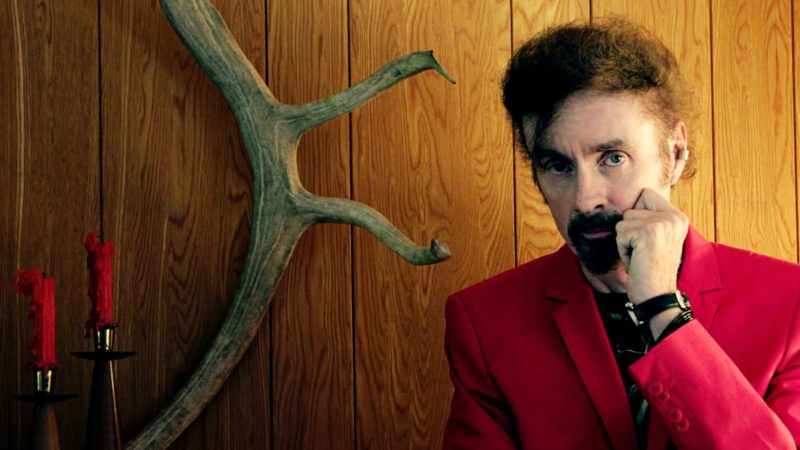
T.Coraghessan Boyle is the author of twenty-eight books of fiction, including, most recently, After the Plague (2001), Drop City (2003), The Inner Circle (2004), Tooth and Claw (2005), The Human Fly (2005), Talk Talk (2006), The Women (2009), Wild Child (2010), When the Killing’s Done (2011), San Miguel (2012), T.C. Boyle Stories II (2013), The Harder They Come (2015), The Terranauts (2016), The Relive Box (2017) and Outside Looking In (2019). He received a Ph.D. degree in Nineteenth Century British Literature from the University of Iowa in 1977, his M.F.A. from the University of Iowa Writers’ Workshop in 1974, and his B.A. in English and History from SUNY Potsdam in 1968. He has been a member of the English Department at the University of Southern California since 1978, where he is Distinguished Professor of English.
Peter Wolf
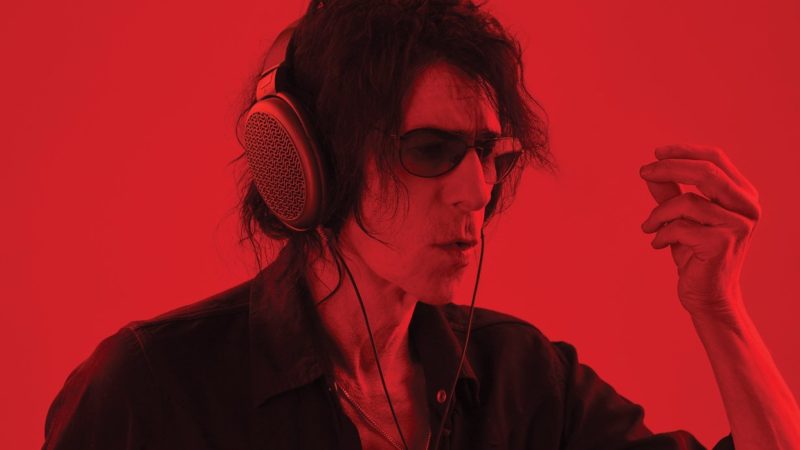
A Cure for Loneliness manifests the same vibrant passion for music that’s motivated Peter Wolf for most of his life. Growing up in an artistic, politically engaged family in the Bronx, he became an early rock ‘n’ roll convert after attending an Alan Freed rock ‘n’ roll revue that included performances by Chuck Berry, Buddy Holly, Jerry Lee Lewis, Little Richard and Frankie Lymon. His thirst for new and old sounds drove him to exploring blues, soul, country, folk and jazz, inspiring weekly visits to Harlem’s Apollo Theatre and leading to acquaintances with many of the music’s surviving originators.
Wolf’s talent as a painter won him a grant to study at the Boston Museum School of Fine Arts. While a student there, he experienced a life-changing epiphany after jumping on stage to sing with a blues band at a loft party. He soon talked himself into membership in that band, The Hallucinations.
“I didn’t join a band to meet girls,” Wolf recalls. “I joined my first band to meet musicians. Painting was a fascination for me, but I was a music fanatic, and sitting in with that band was a born-again type of experience for me. I was transfixed, and myself and some of the guys in the band would check out performances by the musicians we admired so much, like Muddy Waters and John Lee Hooker and John Coltrane and Bill Monroe and the Stanley Brothers. Those roots stayed with me.”
Wolf’s natural loquaciousness won him a job as an all-night DJ on the fledgling FM rock station WBCN. Adopting the persona of “the Woofa Goofa,” he spun raw rock ‘n’ roll and rhythm ‘n’ blues, channeling the spirit of the flashy, fast-talking DJs he’d grown up listening to.
Wolf’s encyclopedic musical knowledge came in handy when he and some like-minded Boston players formed the J. Geils Band, much of whose early repertoire was drawn from Wolf’s vast record collection. The band soon became a local favorite injecting a much-needed jolt of raw, uninhibited rock ‘n’ roll into the ’70s scene and was soon signed by Jerry Wexler for Atlantic Records. Between 1970 and 1983, the J. Geils Band released 13 influential albums, topped the pop single charts with 1981’s “Freeze Frame,” “Love Stinks,” “Centerfold,” and earned a reputation as one of rock’s most exciting live acts, thanks in large part to Wolf’s flamboyant, hyperactive stage presence.
After going solo with 1984’s Lights Out, Wolf continued to stake out new musical territory with the subsequent releases Lights Out, Come As You Are, Up to No Good, Long Line, Fool’s Parade, Sleepless and Midnight Souvenirs, and A Cure For Loneliness. His solo work has seen him collaborate with the likes of Aretha Franklin, Merle Haggard, John Lee Hooker, Mick Jagger, Keith Richards, Little Milton, Wilson Pickett, Shelby Lynne and Neko Case. Wolf temporarily reunited with his J. Geils Band cohorts for live shows on several occasions between 1999 and 2015, but his solo career has remained his creative focus, as A Cure for Loneliness makes clear.
Feast Your Ears – WHFS
Watch now on PBS.org
A DOCUMENTARY FILM:
Feast Your Ears: The Story of WHFS 102.3
is a feature length documentary film that will take you on a trip back to the ’60s, ’70s and ’80s when “free form” progressive FM radio was in its heyday in America. Broadcasting from “high atop the Triangle Towers” near Washington, DC the legendary & beloved WHFS was more than just a local radio station – it was the voice of a generation. Hear from local, national and international musicians, the ‘HFS deejays, record label veterans, journalists, historians, fans and more as they reflect on a time when the music united a tribe who spoke out via the radio waves about war, equality and a time of great social, cultural and political upheaval.
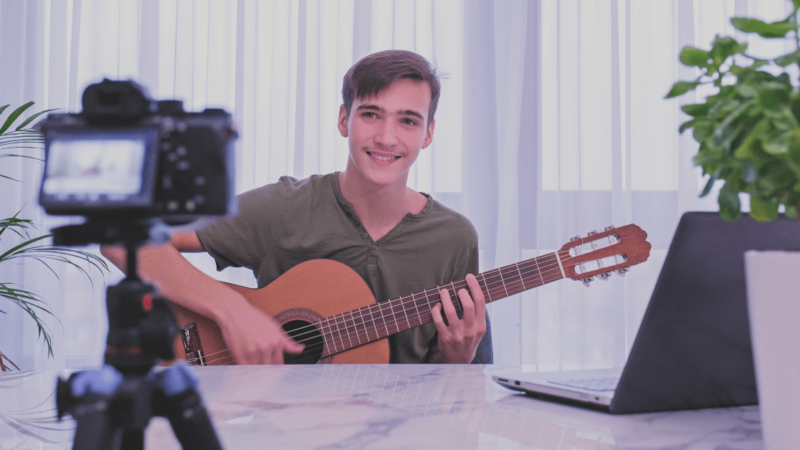
Why & How You Should Support Artists During COVID
It’s time to support artists
The music industry and local musical artists have had to navigate their careers differently since the Covid-19 lockdown. It’s very important for us as consumers to continue to support our favorite music artists, especially during the Covid-19 pandemic. People throughout the United States are struggling during this time. Millions of people are unemployed and are unable to return to work. Thousands of businesses have shut down and even music artists are having trouble making money during this time. Music artists are unable to make money while on a tour which is greatly affecting their ability to earn income. Many bands and hip-hop artists have pointed out in the past that the majority of the money they make is on tour. Even indie artists make a large portion of here money touring local areas to keep the band going. Consumers should try to support their favorite artists so they can stay intact. Artists are unable to have in-person events and signings which can be so exciting and beneficial to the artist. Spotify and streaming services do not pay artists large amounts of money. In 2020 physical albums are almost non-existent and most music is available for free. Roaming the Arts has an online community that supports musicians, artists, and writers. Now is the time for consumers to stand up and support artists during this difficult time!
Ways to Support Artists During Covid
- Branding and promotion can be so beneficial to musical artists. Spreading your favorite artist’s music on social media can be so helpful to them. Retweets and posts on Instagram can during this time will e greatly appreciated.
- You can share music and resources within your circle of friends
- Encourage your friends to support their favorite artists. Buy and stream most as often as you can.
- Tweet and reach out to your favorite artists and tell them how much you love and appreciate their music. Bands and rappers need to know their fans still want them to keep releasing must and that they will be first in line to buy their tickets once they can go on tour again. If you are employed or cannot work it’s fully understandable if you cannot financially support your favorite artists. The smallest things such as a tweet or direct message will always be appreciated. This can potentially help boost sales.
- Music streaming sites don’t pay large amounts of money but they still make up nearly 20% of an artist’s income. If you consumers can accumulate enough stream it definitely can be beneficial to an artist. Streaming sites are even introducing tipping options. If you would like to you can support artists by sending them money directly. Establishing more revenue flow can be so helpful to struggling indie artists.
- Many artists have YouTube channels and live streams where you can come support them I’ve seen many artists focus more on making content and releasing music on youtube to make a living.
-
It’s time to support artists!!!
