Anders Osborne
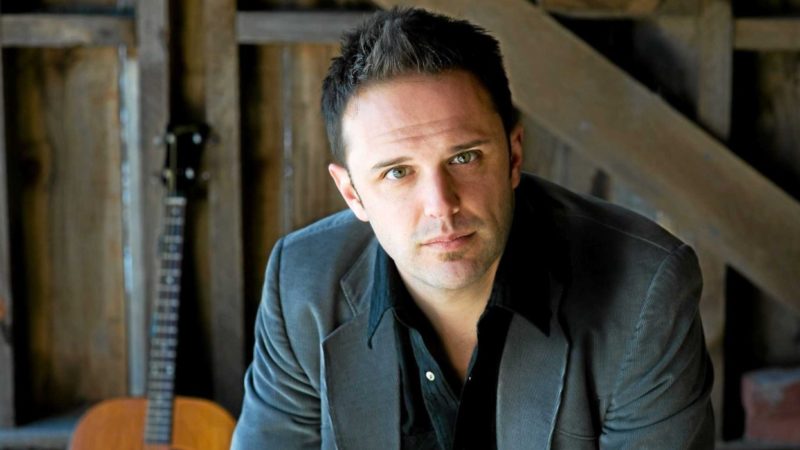
Anders Osborne has earned hordes of new fans. He has toured virtually non-stop, either with his own band, as a solo artist, or as a guest with his countless musical admirers, including Toots and The Maytals, Stanton Moore, Derek Trucks, Warren Haynes, Keb Mo, The Grateful Dead’s Phil Lesh, Jackie Greene and Karl Denson’s Tiny Universe. He’s produced and played on critically acclaimed albums by Tab Benoit, Johnny Sansone and Mike Zito.
Since his recording debut in 1989, Osborne has written virtually all of his own material and contributed memorable songs to a wide variety of artists. Two tunes co-written by Osborne appear on Keb Mo’s Grammy-winning 1999 release Slow Down. Country superstar Tim McGraw scored a #1 hit with Anders’ song Watch The Wind Blow By. Osborne’s compositions have been covered by artists as diverse as Brad Paisley, Tab Benoit, Jonny Lang, Edwin McCain, Sam Bush, Trombone Shorty and Aaron Neville and Kim Carnes. His songs have appeared in multiple feature films. He can also be seen performing in an episode of HBO’s New Orleans-based drama, Treme.

You Might also like
-
Eilen Jewell
From: Bernard Zuel – Music Journalist
FULL DISCLOSURE: WHY THE RULES HAVE CHANGED FOR EILEN JEWELL
MAYBE IT’S THE MIDWEST UPBRINGING of politeness and reserve that lay behind it. Maybe it’s the natural defence of someone who already was out and exposed as an artist in a corner of Americana that values the personal as much as the historical. Whatever it might be with Eilen Jewell, in about 13 years of interviewing her, she has always shown herself adept at talking about her songs and her life in a way that deflected personal revelations.
It’s not that she didn’t answer questions, but those answers made the generalities of her characters the focal point and gave just enough to let us see how she’d build relationships to them but not be defined by them. It was politely done of course, and was not without things to chew on given a sharp intelligence and an eye on American culture whether it was her love of Loretta Lyn and Howlin’ Wolf, the pay gap between the sexes, or political resistance as something of a progressive island in a state that’s anything but.
Well, things have changed with the coming record, Get Behind The Wheel. Not only has Jewell written an album that came out of the Covid-era breakup of her marriage to long-time drummer, co-manager, and co-parent, Jason Beek, and some deaths in her wider family, but she has been talking openly, frankly, about her circumstances.
It’s hard to imagine that was a comfortable transition, not least because growing up in Idaho you kept your business to yourself, but you have to wonder if it has been dragged out of her, or did she feel it was inevitable and stopped fighting.
“It is really new for me to talk about anything having to do with my personal life,” the Boise-based Jewell says. “But this time around it seemed like it would be wrong to not discuss it because this album is so, so directly influenced by everything that I’ve gone through in the past couple of years. I just feel like I would be lying if I said ‘oh, I don’t know, it’s just about people and things’ [she laughs].
“Also the pandemic taught me that that there’s something really important about sharing parts of ourselves. That’s what sharing my music is [and] I guess it dawned on me this actually could be a good thing for me, it could open me up to my fans and there’s a chance there could be some cathartic sharing on both sides.”
There probably won’t be any problems getting her fans to share their thoughts next month when she will spend several weeks in Australia (heaven knows we’re not a quiet bunch), but when you put these things out like Jewell is now doing, not only are you exposing yourself but you are setting the agenda for how things are interpreted. And this is before even considering that Beek is still playing in her band and will be on the tour.
How people interpret your songs and your album, and inevitably yourself, will be shaped by these revelations and explanations. Is that a good thing? Was it even planned?
“The label was saying you’ve got to figure out how to talk about this new album, so I was like, yeah, shoot, I’ve gotta decide how much do I want to disclose? How much do I want to set the stage for these songs?,” she says. “Because, yeah, in the past I’ve not done that and thought that the songs should stand on their own and people can interpret them how they want. People are still free to interpret them however, obviously, but this album really did occur at a particular point in time for me. It was a disaster of a moment in my life this album was born out of, beyond anything else I’ve ever experienced, and I felt this album deserved an exception to my normal rule.” It was time? At 43, maybe it’s as simple as that.
“I guess I do want to talk about this stuff, this stuff being the pandemic, the divorce that came out of that, or coincided with it, and then family losses, people near and dear to me – not even Covid-related, but just one after another,” Jewell says. “For the first time in my life it feels cathartic to talk about what was going on behind the scenes. I don’t think it’s necessary information to appreciate the album, but there’s a few Neil Young albums where I gleaned he was going through a particular thing in his life and then read later that in fact, yes that’s happening, and something about that makes me appreciate the album just a little bit more. I have a sense of who he is more.”
From a long low base of knowledge about the album so far – it’s not yet available to media, let alone the public, though we will hear some songs from it at her March shows – a title like Get Behind The Wheel suggests maybe taking control of her life, or at least setting the direction. How did she handle this resetting and reclaiming of control?
“It’s really been a mixed bag,” she confesses. “I think when I wrote that song – the song that contains that phrase ‘get behind the wheel’ is called Alive – I felt so inspired to take control and have agency, it was all very new. I was like, well, so much is crashing down around me but this is an opportunity to just up inside my life in a really authentic way. And that’s still present, but I’m also realising that it’s much harder than it sounds, and sometimes [she laughs ruefully] it’s awful.” No one would blame her for looking away.
“There’s part of me that would just love to drift around and say ‘I don’t know, someone else take the wheel: I’m getting tired already’,” says Jewell. “But I was guilty of some of that for many years, going with the flow with my career, and my personal life too … being cooperative, and they really comes at a cost eventually. You can’t keep whittling your life away like that. Eventually you realise that your heart is not fully in it, and there’s always a reckoning with that.” When she looks at who she was, even three years ago, and who she is now, how does she judge that person?
“I … think … that … person … was … somewhat,” she says slowly, before a long pause. “Somewhat overeager to find distractions. The old me really didn’t want to look at life just as it is. The old me was always kind of looking into the future, thinking about how things will be better or should be better, or the past. The here and now was something that I tended to avoid. “But all we really have is the here and now. The past is gone and the future is a fantasy.”
Post Views: 2,358 -
Josh Ritter
Josh Ritter
Josh Ritter is an American singer, songwriter, musician, and author who performs and records with the Royal City Band. Ritter is known for his distinctive Americana style and narrative lyrics. In 2006 he was named one of the “100 Greatest Living Songwriters” by Paste magazine. Wikipedia
Josh Ritter is also an author. Check out his novel Bright’s Passage
Post Views: 3,732 -
Jesse Winchester
in memoriam
Jesse Winchester, the esteemed singer-songwriter who became a symbol of the anti-war movement when he moved to Canada to escape the draft in the Sixties, died April 11th, 2014, from bladder cancer. Winchester, who was living in Virginia when he died, was 69.
While never as well known as peers like James Taylor and Jackson Browne, Winchester wrote some of the defining singer-songwriter tracks of the seventies — evocations of American and Southern life like “Yankee Lady,” “Biloxi,” “Mississippi You’re on My Mind” and “The Brand New Tennessee Waltz” that ached with feelings of loss for the country he decided he had to leave. The songs gained him a cult following and critical respect, and were covered by everyone from George Strait to Tim Hardin. Winchester was considered such a formidable songwriter that a 2012 tribute album, Quiet About It, featured versions of his songs by Taylor, Elvis Costello, Jimmy Buffett, Rosanne Cash, Lucinda Williams, and Vince Gill, among others.
Born in Shreveport, Louisiana, in 1944, Winchester started playing music in Memphis, where his family later relocated. In 1967, he received a draft induction letter, but instead of showing up, he took a plane to Montreal. “I was so offended by someone’s coming up to me and presuming to tell me who I should kill and what my life was worth,” he told Rolling Stone in 1977. He arrived in Canada with only $300 and no connections, but settled into a new life, joining a local band and finally writing his own material. (Rolling Stone)

RIP Jesse Post Views: 5,514