
It is a matter of taste, who may qualify as ones favorites. We believe that those listed in this category have earned favoritism in many ways. We will continue to add musicians and authors to this tab. Take a moment and check them out.
-

Subdudes
Subdudes
The Subdudes are an American roots rock group from New Orleans. Their music blends folk, swamp pop, New Orleans rhythm and blues, Louisiana blues, country, cajun/zydeco, funk, soul and gospel with harmonic vocals. Their sound is notable for the band’s substitution of a tambourine player for a drummer.
 New recording out now
-

Rickie Lee Jones
Rickie Lee Jones occupies a unique space in the American musical landscape, serving as a bridge between the gritty bohemianism of the late 1970s and the sophisticated, genre-bending artistry of the modern era. Often hailed as the “Duchess of Coolsville,” Jones burst into the public consciousness in 1979 with a sound that felt entirely new. Her eponymous debut album arrived with a mixture of street-smart poetry and jazz-inflected phrasing. The massive success of the single “Chuck E.’s in Love” turned her into an overnight sensation, making her the face of a new kind of singer-songwriter—one comfortable with both beatnik aesthetics and pop sensibilities.Her nomadic childhood laid the foundation for this restless spirit. Born in Chicago and raised across several states, Jones developed a worldview as a permanent outsider. This sense of displacement became a central theme in her songwriting, fueling the cinematic narratives of her albums. By the time she reached Los Angeles in the mid-1970s, she was a fixture of the Troubadour scene. While her relationship with Tom Waits during this period became legendary, it was her own musical identity—characterized by complex arrangements and a refusal to stick to a single tempo—that defined her legacy.Following her debut, Jones defied the “sophomore slump” with Pirates (1981). To many, this remains her masterpiece. It was an ambitious, darker record featuring sprawling tracks like “The Last Chance Texaco.” Pirates showcased her ability to weave intricate stories of the American road into a tapestry of jazz, rock, and R&B. During this time, her reputation for being uncompromising was solidified; she followed her muse rather than industry trends.As the years progressed, Jones continued to surprise audiences with stylistic shifts. She delved into the Great American Songbook with albums like Girl at Her Volcano and Pop Pop, proving herself one of the finest interpretive singers of her generation. Her ability to deconstruct a standard allowed her to stand alongside jazz greats. Yet, she never stayed in one place; in 1997, she released Ghostyhead, an experimental trip-hop album that proved her songwriting could thrive even in electronic contexts.The turn of the millennium saw Jones leaning into her role as a chronicler of the human condition. Albums like Balm in Gilead showcased an artist grappling with spirituality and aging. Her voice gained a weathered, soulful quality that added weight to her lyrics. In 2021, she released her memoir, Last Chance Texaco, providing a raw look at her life from her traumatic youth to her enduring commitment to her craft.Recently, Jones found a new home in New Orleans, which influenced her 2023 album Pieces of Treasure. This return to jazz roots earned her an eighth Grammy nomination and feels like a full-circle moment for an artist who has retained her edge. Rickie Lee Jones remains a singular figure, a troubadour finding beauty in the margins and poetry in the everyday.
-
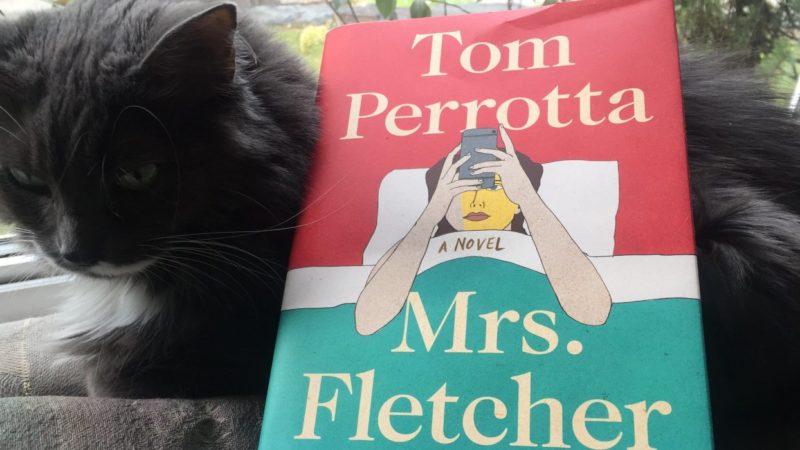
Tom Perrotta
Tom Perrotta is often hailed as the “American Chekhov” of the suburbs, a writer who has spent over three decades dissecting the quiet desperation, suburban ennui, and darkly comic absurdities of middle-class life. Born in 1961 in Newark, New Jersey, Perrotta’s perspective was shaped by his upbringing as the son of a postal worker. This background instilled in him a “down-to-earth, egalitarian” literary voice that treats everyday struggles with the gravity typically reserved for epic drama.
Perrotta’s ascent into the literary mainstream was fueled by his uncanny ability to turn local settings into universal metaphors. His breakout novel, Election (1998), utilized a high school student council race to satirize the broader American political landscape. The introduction of Tracy Flick—a character defined by relentless, terrifying ambition—created a permanent cultural archetype, further cemented by Alexander Payne’s iconic film adaptation. He followed this success with Little Children (2004), a novel that transformed the mundane world of playgrounds and neighborhood pools into a psychological battlefield. By exploring the secret lives and unfulfilled desires of stay-at-home parents, Perrotta exposed the “Dante’s Inferno” hiding behind manicured lawns. The book solidified his reputation for writing with a “crisp and light” style that never shies away from moral complexity.While realism was his initial forte, Perrotta took a daring thematic turn with The Leftovers (2011). Using a “pseudo-Rapture” as a catalyst, he shifted his focus toward communal grief and the search for meaning in an indifferent universe. The novel’s adaptation into a celebrated HBO series, which Perrotta co-created, marked a major evolution in his career. He became a rare “writer’s writer” who successfully navigated the worlds of prestige television and literary fiction, a trend he continued with the 2019 adaptation of his novel Mrs. Fletcher.Perrotta’s prose is characterized by its lack of judgment. Whether his characters are struggling with sexual identity, religious zealotry, or professional failure, he presents them with a compassionate clarity. He draws heavy inspiration from his former teacher, Tobias Wolff, and the disciplined storytelling of Raymond Chandler. Like his father’s commitment to his mail route, Perrotta maintains a rigorous work ethic, viewing his writing as a way to process subconscious material that holds deep personal and social significance.In his most recent works, Perrotta has explored the complexities of aging and the weight of the past. Tracy Flick Can’t Win (2022) revisited his most famous character in middle age, finding her still fighting for a seat at the table. His 2026 novel, Ghost Town, marks another shift toward a “pared down” and essential style, focusing on abandonment and the lingering presence of those we have lost. Living in Belmont, Massachusetts, Perrotta remains a vital voice in American letters, consistently proving that there is nothing “small” about suburban life. His legacy is defined by a body of work that finds original and beautiful truths in the most ordinary of places.
