
Thomas Perry
is the author of 25 novels including the Jane Whitefield series (Vanishing Act, Dance for the Dead, Shadow Woman, The Face Changers, Blood Money, Runner, Poison Flower, and String of Beads), Death Benefits, and Pursuit, the first recipient of the Gumshoe Award for best novel.
He won the Edgar for The Butcher’s Boy, and Metzger’s Dog was a New York Times Notable Book. The Independent Mystery Booksellers’ Association included Vanishing Act in its “100 Favorite Mysteries of the 20th Century,” and Nightlife was a New York Times bestseller.
Metzger’s Dog was voted one of NPR’s 100 Killer Thrillers–Best Thrillers Ever. Strip was chosen as a New York Times Notable Crime Book for 2010, and The Informant was a New York Times Notable Crime Book for 2011 and won the Barry Award for Best Thriller, 2011. Poison Flower was chosen among Booklist’s Best Crime Novels of 2013.
His recent books, The Burglar and The Small Town were first rate, and his latest release, Eddie’s Boy is out now.
Watch for “The Old Man” coming to FX as a series.

-

Site Visitor User Guide
Roaming the Arts: Visitor User Guide
Welcome to Roaming the Arts, an arts discovery site built for readers, listeners, collectors, browsers, and fans who enjoy finding writers, musicians, bands, and visual artists worth exploring. The site is designed as an arts browser: a place to roam through books, music, art, videos, artist websites, author pages, and creative recommendations at your own pace.
1. Start on the Homepage
The homepage is the best place to begin if you want to see what is new, featured, or recently updated. Scroll through current posts, browse featured artists and authors, and use the visible category buttons or top menu options to move into the areas that interest you most.
2. Choose a Category
Roaming the Arts is organized around creative discovery. Visitors can explore music, books, authors, book club ideas, books by location, word-and-film connections, visual artists, recent reads, all-time favorites, and other arts-focused features. If you arrive with a specific interest, use the category menu. If you arrive open to discovery, simply browse and follow what catches your attention.
3. Use Artist, Author, and Music Posts as Gateways
Most posts are designed to help you go deeper. A music post may include an embedded video, background on the artist, and a path to hear more. A book or author post may point you toward a new series, a recent release, or a writer you may not have discovered yet. A visual art post may help you visit an artist’s online presence and see more of the work directly.
4. Follow Links and Explore Beyond the Site
Roaming the Arts is meant to send visitors outward as well as inward. When you find someone interesting, visit their website, look for tour dates, search for a new recording, check for upcoming books, or explore related work. The goal is not just to read about creative people, but to become a fan, listener, reader, collector, or supporter.
5. Browse by Mood or Mission
- If you want something to hear, begin with Music or Indie Music Artists.
- If you want something to read, try Books/Authors, Book Club, Recent Reads, or Books by Location.
- If you want something visual, visit Art/Artists.
- If you want a trusted starting point, look for favorites and featured posts.
- If you want to wander, start anywhere and let the posts guide you from one discovery to the next.
6. Interact and Suggest
Visitors are encouraged to participate. If you discover an author, musician, band, or visual artist who belongs in the Roaming the Arts universe, share the suggestion. Comments, emails, and social media interactions help shape what gets discovered next.
7. Come Back Often
Roaming the Arts is always growing. New posts, recent reads, featured musicians, and visual discoveries continue to expand the site. A quick visit can lead to a new favorite song, a book for your next vacation, a writer for your book club, or an artist whose work stays with you.
-
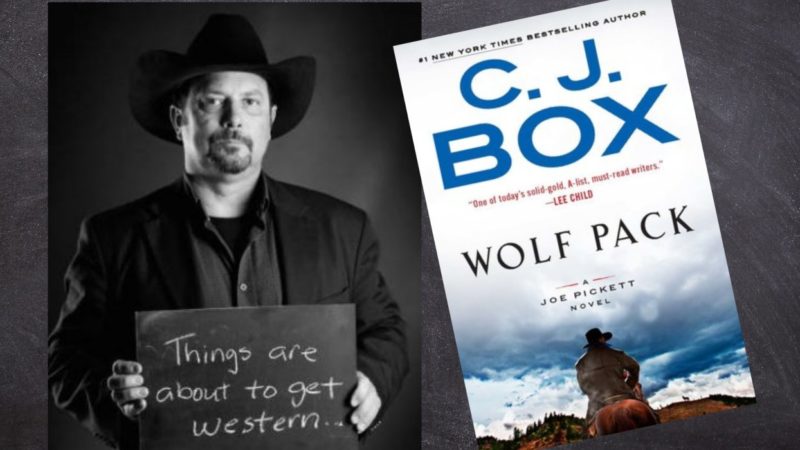
C.J. Box
Location – Montana/Wyoming
C. J. Box
C. J. Box is the #1 New York Times bestselling author of 27 novels including the Joe Pickett series. He won the Edgar Alan Poe Award for Best Novel (Blue Heaven, 2009) as well as the Anthony Award, Prix Calibre 38 (France), the Macavity Award, the Gumshoe Award, two Barry Awards, and the 2010 Mountains & Plains Independent Booksellers Association Award for fiction. He was recently awarded the 2016 Western Heritage Award for Literature by the National Cowboy Museum as well as the Spur Award for Best Contemporary Novel by the Western Writers of America in 2017. Over six million copies of his books have been sold in the U.S. and abroad and they’ve been translated into 27 languages. Two television series based on his novels are currently in development.
Watch “Big Sky” on ABC & Joe Pickett on Paramount+
-

Hank Phillippi Ryan
Location-Boston
Hank Phillippi Ryan
A nationally bestselling author of 11 mystery novels, Ryan has won multiple prestigious awards for her crime fiction: five Agathas, three Anthonys, the Daphne, two Macavitys, and for The Other Woman, the coveted Mary Higgins Clark Award. National reviews have called her a “master at crafting suspenseful mysteries” and “a superb and gifted storyteller.”
