

Don Winslow


Don Winslow
An author with an impact and a message – see Don Winslow Films
January 2026 – He’s back with – The Final Score
April 2024 – City in Ruins
April 2023 – City of Dreams
April 2022 – The start of a new trilogy – City on Fire
“Epic, ambitious, majestic, City on Fire is The Godfather for our generation.” – Adrian McKinty, New York Times bestselling author of The Chain
Two criminal empires together control all of New England.
Until a beautiful woman comes between the Irish and the Italians, launching a war that will see them kill each other, destroy an alliance, and set a city on fire.
Danny Ryan yearns for a more “legit” life and a place in the sun. But as the bloody conflict stacks body on body and brother turns against brother, Danny has to rise above himself. To save the friends he loves like family and the family he has sworn to protect, he becomes a leader, a ruthless strategist, and a master of a treacherous game in which the winners live and the losers die.
From the gritty streets of Providence to the glittering screens of Hollywood to the golden casinos of Las Vegas, two rival crime families ignite a war that will leave only one standing. The winner will forge a dynasty.
Exploring the classic themes of loyalty, betrayal, and honor, City on Fire is a contemporary masterpiece in the tradition of The Godfather, Casino, and Goodfellas—a thrilling saga from Don Winslow, “America’s greatest living crime writer” (Jon Land, Providence Journal).
A most unusual review – #BooksWithWallace
2020 release, “Broken.”
In six intense short novels connected by the themes of crime, corruption, vengeance, justice, loss, betrayal, guilt and redemption, Broken is #1 international bestseller Don Winslow at his nerve-shattering, heart-stopping, heartbreaking best. In Broken, he creates a world of high-level thieves and low-life crooks, obsessed cops struggling with life on and off the job, private detectives, dope dealers, bounty hunters and fugitives, the lost souls driving without headlights through the dark night on the American criminal highway.
With his trademark blend of insight, humanity, humor, action and the highest level of literary craftsmanship, Winslow delivers a collection of tales that will become classics of crime fiction.
The Trilogy
Of all the blows delivered by Don Winslow’s Cartel trilogy, none may be as devastating as the timing of “The Border,” its stunner of a conclusion. Though Winslow cannot have engineered all of this 14 years ago when he started this series, his sweeping new novel concerns subjects that put it right on the culture’s front burner: the Mexican-American border, the handling of migrant children, the opioid crisis and some barely fictionalized claims about how foreign money has bought influence at the highest level of the U.S. government.
The book’s title, “The Border,” refers to both physical and moral barriers. Winslow is well aware that both that and its cover image, which depicts a razor-wire-topped wall spreading across a desert landscape, are politically loaded. “Loaded phrases, like loaded guns, are more interesting, aren’t they?” Winslow said to Entertainment Weekly in September. As for the book’s depiction of fiercely partisan American politics, including its treatment of characters who are unmistakable versions of the current president and his son-in-law: “I know this book is going to make some people angry. I can live with that.”
Even though the first installment of this trilogy was named “The Power of the Dog,” after a biblical intimation of evil (“Deliver my soul from the sword; my love from the power of the dog,” Psalms 22:20), it only hinted at the magnitude and ferocity of what was to come. That opening novel now looks like the series’ relatively innocent prologue — and it is as blade-sharp, violent, pulse-quickening and reportorially shocking as the pinnacle of some lesser series might be.
“The Power of the Dog” is, in brief, about the first decades that bind the destinies of Art Keller, a Vietnam veteran and later D.E.A. agent, and Adán Barrera, a young Mexican who will go on to achieve the most dizzying heights of power. The book begins in a burning Mexican poppy field in 1975 (“Only in hell, Art Keller thinks, do flowers bloom fire”) and leaves Keller among more poppies in 2004. Many unspeakable acts happen in between, melding the personal with the political (Iran-contra). It is all rendered unputdownable by Winslow’s unrivaled skill at his game.


Little Feat
Little Feat
The Can’t Be Satisfied Tour is still going strong. Check the list for a city near you.
This recent VIDEO celebrating Waiting for Columbus at the Ryman Auditorium in Nashville kicks a Fat Man in the Bath Tub into 2025 high gear.
Paul is gone and Lowell George, gone so long we can only imagine what he may have accomplished as his 78th birthday recently passed.
R.I.P. Paul Barrere
Now, a Billy Payne led band has opened a new chapter. Out on the road, hosting festivals, and recently featured on a cruise (Big Easy Cruise 2023.)
Gotta Love ‘Em. FEAT, FEAT FEAT FEAT.
Must check out this Video , featuring very young guests, Emmy Lou Harris, Bonnie Raitt, and Jesse Winchester.
Other former members of the band to be cherished:
Shaun Murphy
Craig Fuller
Read this great article:
Where Do I Start With Little Feat?
By Lara Zarum

Ace Atkins
Location for Quinn Colson series – Mississippi
New York Times Bestselling author Ace Atkins has been nominated for every major award in crime fiction, including the Edgar three times, twice for novels about former U.S. Army Ranger Quinn Colson. He has written eight books in the Colson series and continued Robert B. Parker’s iconic Spenser character after Parker’s death in 2010, adding seven best-selling novels in that series. A former newspaper reporter and SEC football player, Ace also writes essays and investigative pieces for several national magazines including Time, Outside and Garden & Gun.
His most recent stand-alone Don’t Let the Devil Ride is a daring ride through Memphis grit.
He lives in Oxford, Mississippi with his family, where he’s a friend to many dogs and several bartenders.
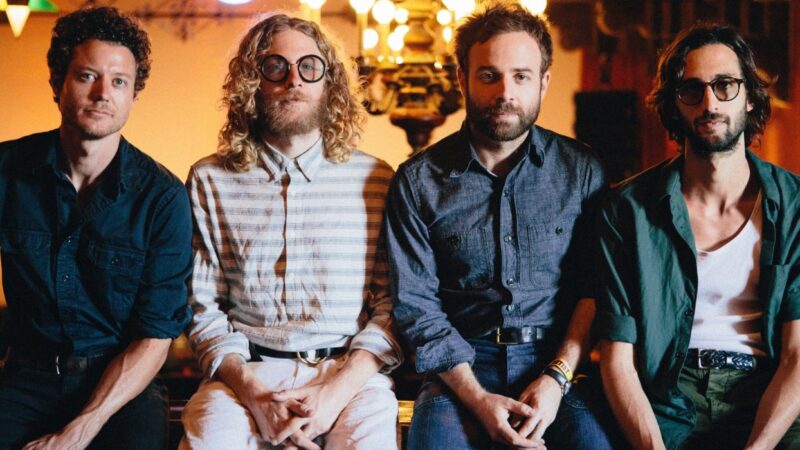
Dawes
Dawes-FB page

Tonio K
Tonio K. (a.k.a. Steven M. Krikorian, b. July 4, 1950) is an American singer/songwriter who has released eight critically acclaimed albums and has had original songs recorded by many of Pop, Rock, Country and R&B’s leading artists ranging from Al Green, Aaron Neville and Burt Bacharach to Bonnie Raitt, Wynonna Judd and Vanessa Williams. His song, “16 Tons Of Monkeys,” co-written with guitarist Steve Schiff, was the featured tune in the 1992 Academy Award winning Live Action Short Film, Session Man. His work with Bacharach and Hip-Hop impresario Dr. Dre won the Grammy for Best Pop Instrumental Recording in 2005.

Deanna Bogart
Deanna Bogart
When it comes to Deanna Bogart, everyone wants to claim her as their own — her hometown, her fans, her fellow musicians and even her instruments. She’s that good–and that good-natured.
Born in Detroit, Deanna spent her early years in Phoenix and New York City, climbing on any available piano bench to plunk and play with preternatural panache. Around the age of six, she was “gently removed” from the Brooklyn Conservatory of Music for playing piano by ear instead of learning to read music. While in middle school, Deanna yearned to play the saxophone. Typical of those times though, she was told, “Girls play the clarinet, not the sax.” Thankfully for us all, that tide has changed.
Today, Deanna Bogart is an award-winning multi-instrumentalist and multifaceted musician whose fans value the diversity of her genre-free zone. As a bandleader/singer/songwriter/producer/pianist/sax player, Deanna combines the best of boogie-woogie, contemporary blues, country and jazz into a splendid blend she calls “blusion.”
Deanna’s fusion of blusion — spontaneous, sophisticated, fearless and fun — has garnered her three consecutive Blues Music Awards’ Horn Instrumentalist of the Year for 2008, 2009 and 2010 and an endorsement contract with Rico Reeds. She has won, at last count, more than 20 Wammies, the music awards for the hotly contested Washington, D.C. region.
Recognized for her dazzling keyboards, soulful saxophone, smoky vocals and cut-above songwriting, Deanna easily wins the hearts of fans on land and at sea on chartered cruises. She is a featured player in the Legendary Rhythm and Blues Revue, jamming with Tommy Castro, Magic Dick (founding member of the J. Geils Band), as well as prominent guitar slingers. Deanna remembers well her early years as a budding musician and is an avid educator and mentor, sharing her insight and wisdom with students of all ages.
