

Our Designer

-

Old Crow Medicine Show
Old Crow Medicine Show got their start busking on street corners in 1998, from New York state and up through Canada, winning audiences along the way with their boundless energy and spirit. They eventually found themselves in Boone, North Carolina where they caught the attention of folk icon Doc Watson while playing in front of a pharmacy. He invited the band to play at his festival, MerleFest, and the rest is history.
It’s been over twenty years since these humble beginnings. The band has gone on to receive the honor of being inducted as members of the Grand Ole Opry, and have won two Grammy Awards: “Best Folk Album” for Remedy (2014) and “Best Long Form Music Video” for Big Easy Express (2013). Additionally, their classic single, “Wagon Wheel”, received the RIAA’s Double-Platinum certification in 2019 for selling over 2,000,000 copies while the band’s debut album O.C.M.S. has been certified Gold (500,000 copies). The band’s latest release is Live At The Ryman (2019) which was released on Columbia via The Orchard. Old Crow Medicine Show’s latest endeavor is the Hartland Hootenanny, a variety show hosted on You Tube that features music, storytelling, special guests, socially distanced square dancing and more. (Courier Express)
-
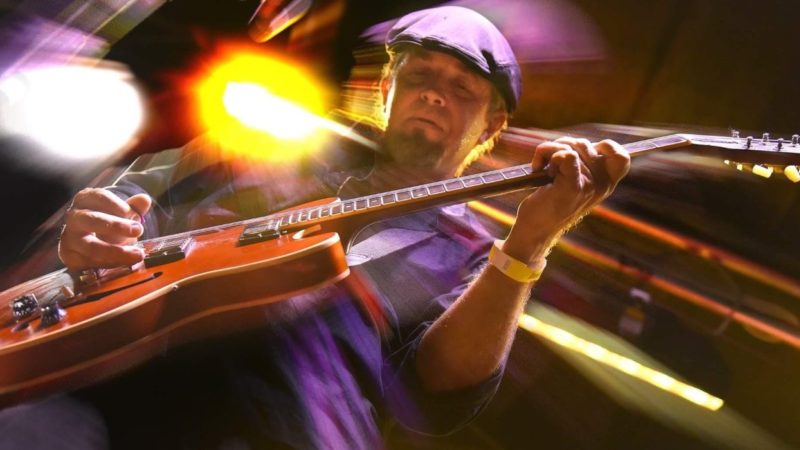
J. P. Soars
Soars got bitten by the blues bug via a legendary source in 1988, when he won a guitar and two tickets in a raffle to see B.B. King in concert. Meeting the iconic guitarist and singer further enhanced the young musician’s quest to learn more about the timeless power of the music. Soars started his blues recording career a decade ago with the 2008 release Back of My Mind, followed by More Bees With Honey (2011) and Full Moon Night in Memphis (2014). Collectively, his catalog has received extensive airplay on the XM Radio programs of Little Steven (“Underground Garage”) and B.B. King (“Bluesville”); Top 50 status on the “Living Blues” charts, Blues Music Award nominations for “Best Contemporary Male Blues Artist of the Year,” and “Best Blues CD” and “Album of the Year” accolades from the Palm Beach Post.
A gritty and expressive vocalist, Soars elicits signature tones from hollow-body guitars, plus a home-made two-string cigar box guitar for his incendiary slide guitar playing. All of which has helped him earn dates at the Baltic Sea Festival in Germany, the Liberation Day Festival in Holland, and other shows in France, Switzerland, Luxembourg, Austria, and Colombia as well as road work throughout the United States and Canada.
-
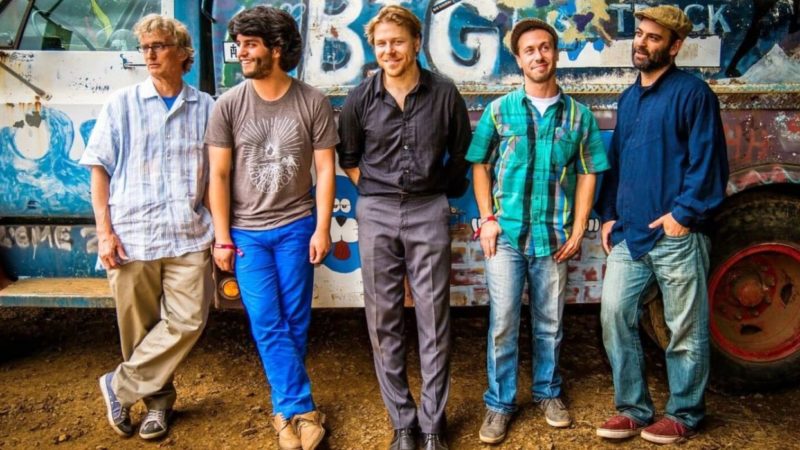
California Honeydrops
California Honeydrops
The Honeydrops have come a long way since guitarist and trumpeter Lech Wierzynkski and drummer Ben Malament started busking in an Oakland subway station, but the band has stayed true to that organic, street-level feel. Listening to Lech sing, it can be a surprise that he was born in Warsaw, Poland, and raised by Polish political refugees. He learned his vocal stylings from contraband American recordings of Sam Cooke, Ray Charles, and Louis Armstrong, and later at Oberlin College and on the club circuit in Oakland, California. With the additions of Johnny Bones on tenor sax and clarinet, Lorenzo Loera on keyboards, and Beau Bradbury on bass, they’ve built a powerful full-band sound to support Wierzynski’s vocals. More like parties than traditional concerts, their shows feature extensive off-stage jamming and crowd interaction. “The whole point is to erase the boundaries between the crowd and us,” Wierzynski says. “We don’t make setlists. We want requests. We want crowd involvement, to make people become a part of the whole thing by dancing along, singing, picking the songs and generally coming out of their shells.”
