
Location – Oregon
Phillip Margolin
A great collection of legal thrillers written over a span of forty years.

-

Books by Location
Serial Fiction Writers by Location
-

Steve Ulfelder
Steve Ulfelder
Steve Ulfelder is the author of four mystery novels featuring unlikely hero Conway Sax. He’s also a freelance writer and co-owner of an auto-racing business.
Purgatory Chasm, Steve’s debut, was published by Minotaur/Thomas Dunne Books in 2011. It was nominated for the Edgar and Anthony Awards in the Best First Novel category, and was named Best First Mystery by RT Book Reviews. The second Conway Sax novel, The Whole Lie, was published in 2012, with Shotgun Lullaby following in 2013. Book four, Wolverine Bros. Freight & Storage, was named Best PI Novel of 2014 by the Sons of Spade blog.
A new hero and new series : One Mississippi – Available now
Archer Dixon: 37 years old, Ivy educated, smart, funny, well read – but he never has amounted to much. He’s been reduced to bartering handyman services for a roof over his head. Having staggered all his life from job to job, Arch is a newly minted private detective. His first case looks easy-peasy – but when he starts digging, things quickly grow tangled. Before Arch knows it, he’s in the middle of a gang war between Nigerian car thieves and murderous Russians.
-
Tom Perrotta
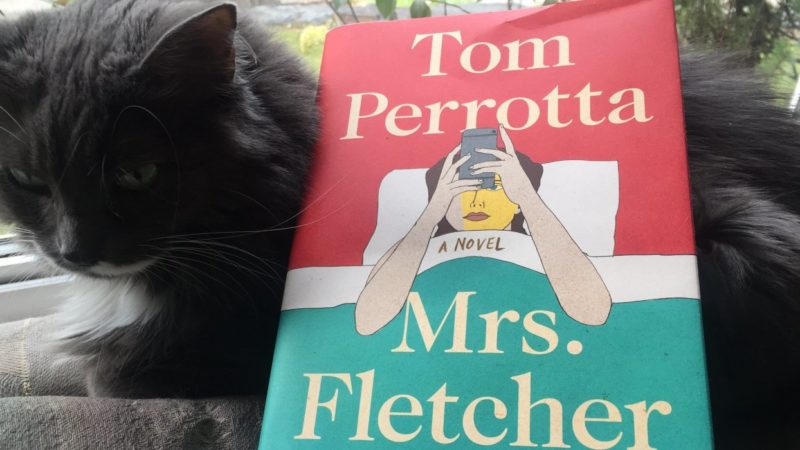
Tom Perrotta is often hailed as the “American Chekhov” of the suburbs, a writer who has spent over three decades dissecting the quiet desperation, suburban ennui, and darkly comic absurdities of middle-class life. Born in 1961 in Newark, New Jersey, Perrotta’s perspective was shaped by his upbringing as the son of a postal worker. This background instilled in him a “down-to-earth, egalitarian” literary voice that treats everyday struggles with the gravity typically reserved for epic drama.
Perrotta’s ascent into the literary mainstream was fueled by his uncanny ability to turn local settings into universal metaphors. His breakout novel, Election (1998), utilized a high school student council race to satirize the broader American political landscape. The introduction of Tracy Flick—a character defined by relentless, terrifying ambition—created a permanent cultural archetype, further cemented by Alexander Payne’s iconic film adaptation. He followed this success with Little Children (2004), a novel that transformed the mundane world of playgrounds and neighborhood pools into a psychological battlefield. By exploring the secret lives and unfulfilled desires of stay-at-home parents, Perrotta exposed the “Dante’s Inferno” hiding behind manicured lawns. The book solidified his reputation for writing with a “crisp and light” style that never shies away from moral complexity.While realism was his initial forte, Perrotta took a daring thematic turn with The Leftovers (2011). Using a “pseudo-Rapture” as a catalyst, he shifted his focus toward communal grief and the search for meaning in an indifferent universe. The novel’s adaptation into a celebrated HBO series, which Perrotta co-created, marked a major evolution in his career. He became a rare “writer’s writer” who successfully navigated the worlds of prestige television and literary fiction, a trend he continued with the 2019 adaptation of his novel Mrs. Fletcher.Perrotta’s prose is characterized by its lack of judgment. Whether his characters are struggling with sexual identity, religious zealotry, or professional failure, he presents them with a compassionate clarity. He draws heavy inspiration from his former teacher, Tobias Wolff, and the disciplined storytelling of Raymond Chandler. Like his father’s commitment to his mail route, Perrotta maintains a rigorous work ethic, viewing his writing as a way to process subconscious material that holds deep personal and social significance.In his most recent works, Perrotta has explored the complexities of aging and the weight of the past. Tracy Flick Can’t Win (2022) revisited his most famous character in middle age, finding her still fighting for a seat at the table. His 2026 novel, Ghost Town, marks another shift toward a “pared down” and essential style, focusing on abandonment and the lingering presence of those we have lost. Living in Belmont, Massachusetts, Perrotta remains a vital voice in American letters, consistently proving that there is nothing “small” about suburban life. His legacy is defined by a body of work that finds original and beautiful truths in the most ordinary of places.
