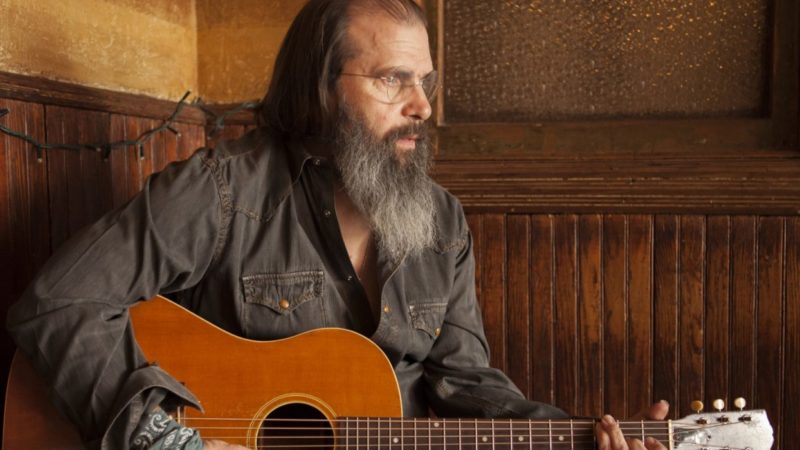
Tonio K. (a.k.a. Steven M. Krikorian, b. July 4, 1950) is an American singer/songwriter who has released eight critically acclaimed albums and has had original songs recorded by many of Pop, Rock, Country and R&B’s leading artists ranging from Al Green, Aaron Neville and Burt Bacharach to Bonnie Raitt, Wynonna Judd and Vanessa Williams. His song, “16 Tons Of Monkeys,” co-written with guitarist Steve Schiff, was the featured tune in the 1992 Academy Award winning Live Action Short Film, Session Man. His work with Bacharach and Hip-Hop impresario Dr. Dre won the Grammy for Best Pop Instrumental Recording in 2005.

You Might also like
-
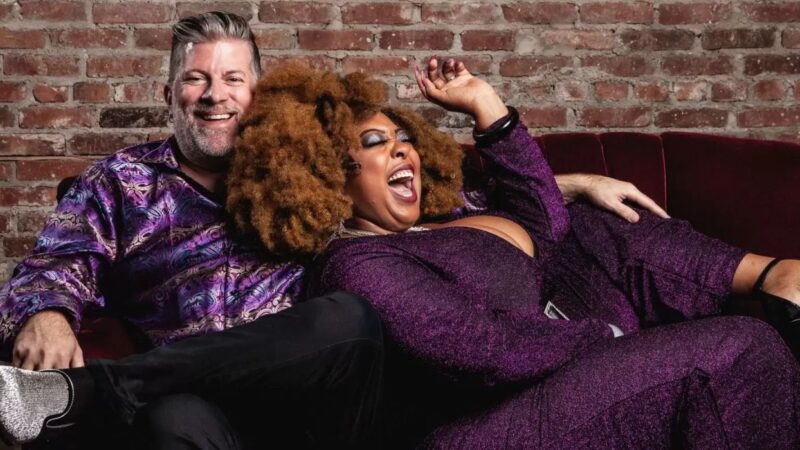
Annika Chambers & Paul DesLauriers
Chambers DesLauriers embodies love, resilience, and the stirring power of blues, soul, and rock ‘n roll. Fronted by the magnetic duo Annika Chambers and Paul DesLauriers, this band unites two celebrated artists whose music and story inspire audiences worldwide.
Their love story began in 2018 with a moment straight out of a movie. During a busy music conference in Memphis, TN, in a jam-packed lobby at the Orpheum Theatre, “we immediately locked eyes,” Annika muses simply about their first magical meeting. But fate had other plans—they wouldn’t cross paths again for another year, and their connection was undeniable when they did. A whirlwind romance, quick engagement, and marriage followed, and now, six years later, their love continues to shine—on stage and off.
Annika Chambers cut her teeth singing in church as a child and led her first song at age 15. Influenced by Mahalia Jackson, Aretha Franklin, Yolanda Adams, and Mavis Staples, she hit the stage in her hometown of Houston for the first time as a professional singer in 2008.
Her strength and determination stem from her 7 ½ years in the U.S. Army, where she served two tours of duty. During this time, she first discovered the blues, and from there, her musical path was set. Annika has cemented her place as a force to be reckoned with in the blues world, earning three Blues Music Awards for Soul Blues Female Artist of the Year (2019, 2022, 2024), with another nomination in 2025.
Hailing from Cornwall, Ontario, Paul DesLauriers picked up his first instrument at age five and never looked back. Studying the greats—B.B. King, Robert Johnson, Bukka White, and Peter Green—he immersed himself in their playing while developing his own distinct style. By 15, he was gigging professionally and, soon after, touring the world under his name. A six-time Maple Blues Award winner, DesLauriers has earned his place as one of Canada’s premier blues-rock guitarists.
A survivor of a traumatic brain injury in 2018, Paul’s experience only reinforced one truth: music was his anchor. “No matter what life throws at you, when you pick up a guitar, it reminds you who you are. I’m blessed that it wasn’t taken away from me. I just had to keep moving forward through the fog.”
Post Views: 271 -
Etienne Charles
Etienne Charles
Hailed by The New York Times as “an auteur” (Ben Ratliff), by Jazz Times as “A daring improviser who delivers with heart-wrenching lyricism” (Bill Milkowski). According to Downbeat Magazine “Charles delivers his ebullient improvisations with the elegance of a world-class ballet dancer.” (John Murph). He has received critical acclaim for his exciting performances, thrilling compositions and knack for connecting with audiences worldwide. In June 2012, Etienne was written into the US Congressional Record for his musical contributions to Trinidad & Tobago and the World. Perhaps more than any other musician of his generation or Eastern Caribbean origin, Etienne brings a careful study of myriad rhythms from the French, Spanish, English, and Dutch speaking Caribbean to the table. Crucially, as a soloist, he fully understands the New Orleans trumpet tradition; which is readily discernible in his trademark instrumental swagger, and what famed Crescent City Pianist, Jelly Roll Morton so succinctly captured in the now immortal phrase, ‘The Spanish Tinge’. He has performed and or recorded with Monty Alexander, Roberta Flack, Frank Foster, Ralph MacDonald, Johnny Mandel, Wynton Marsalis, Marcus Roberts, Maria Schneider, Count Basie Orchestra, Eric Reed, Lord Blakie, David Rudder, and many others. He holds a Master’s degree from the Juilliard School and a Bachelor’s degree from Florida State University. Etienne Charles has taught as an Assistant Professor of Jazz Trumpet at Michigan State University and the University of Miami.
Post Views: 5,064 -
Eilen Jewell
From: Bernard Zuel – Music Journalist
FULL DISCLOSURE: WHY THE RULES HAVE CHANGED FOR EILEN JEWELL
MAYBE IT’S THE MIDWEST UPBRINGING of politeness and reserve that lay behind it. Maybe it’s the natural defence of someone who already was out and exposed as an artist in a corner of Americana that values the personal as much as the historical. Whatever it might be with Eilen Jewell, in about 13 years of interviewing her, she has always shown herself adept at talking about her songs and her life in a way that deflected personal revelations.
It’s not that she didn’t answer questions, but those answers made the generalities of her characters the focal point and gave just enough to let us see how she’d build relationships to them but not be defined by them. It was politely done of course, and was not without things to chew on given a sharp intelligence and an eye on American culture whether it was her love of Loretta Lyn and Howlin’ Wolf, the pay gap between the sexes, or political resistance as something of a progressive island in a state that’s anything but.
Well, things have changed with the coming record, Get Behind The Wheel. Not only has Jewell written an album that came out of the Covid-era breakup of her marriage to long-time drummer, co-manager, and co-parent, Jason Beek, and some deaths in her wider family, but she has been talking openly, frankly, about her circumstances.
It’s hard to imagine that was a comfortable transition, not least because growing up in Idaho you kept your business to yourself, but you have to wonder if it has been dragged out of her, or did she feel it was inevitable and stopped fighting.
“It is really new for me to talk about anything having to do with my personal life,” the Boise-based Jewell says. “But this time around it seemed like it would be wrong to not discuss it because this album is so, so directly influenced by everything that I’ve gone through in the past couple of years. I just feel like I would be lying if I said ‘oh, I don’t know, it’s just about people and things’ [she laughs].
“Also the pandemic taught me that that there’s something really important about sharing parts of ourselves. That’s what sharing my music is [and] I guess it dawned on me this actually could be a good thing for me, it could open me up to my fans and there’s a chance there could be some cathartic sharing on both sides.”
There probably won’t be any problems getting her fans to share their thoughts next month when she will spend several weeks in Australia (heaven knows we’re not a quiet bunch), but when you put these things out like Jewell is now doing, not only are you exposing yourself but you are setting the agenda for how things are interpreted. And this is before even considering that Beek is still playing in her band and will be on the tour.
How people interpret your songs and your album, and inevitably yourself, will be shaped by these revelations and explanations. Is that a good thing? Was it even planned?
“The label was saying you’ve got to figure out how to talk about this new album, so I was like, yeah, shoot, I’ve gotta decide how much do I want to disclose? How much do I want to set the stage for these songs?,” she says. “Because, yeah, in the past I’ve not done that and thought that the songs should stand on their own and people can interpret them how they want. People are still free to interpret them however, obviously, but this album really did occur at a particular point in time for me. It was a disaster of a moment in my life this album was born out of, beyond anything else I’ve ever experienced, and I felt this album deserved an exception to my normal rule.” It was time? At 43, maybe it’s as simple as that.
“I guess I do want to talk about this stuff, this stuff being the pandemic, the divorce that came out of that, or coincided with it, and then family losses, people near and dear to me – not even Covid-related, but just one after another,” Jewell says. “For the first time in my life it feels cathartic to talk about what was going on behind the scenes. I don’t think it’s necessary information to appreciate the album, but there’s a few Neil Young albums where I gleaned he was going through a particular thing in his life and then read later that in fact, yes that’s happening, and something about that makes me appreciate the album just a little bit more. I have a sense of who he is more.”
From a long low base of knowledge about the album so far – it’s not yet available to media, let alone the public, though we will hear some songs from it at her March shows – a title like Get Behind The Wheel suggests maybe taking control of her life, or at least setting the direction. How did she handle this resetting and reclaiming of control?
“It’s really been a mixed bag,” she confesses. “I think when I wrote that song – the song that contains that phrase ‘get behind the wheel’ is called Alive – I felt so inspired to take control and have agency, it was all very new. I was like, well, so much is crashing down around me but this is an opportunity to just up inside my life in a really authentic way. And that’s still present, but I’m also realising that it’s much harder than it sounds, and sometimes [she laughs ruefully] it’s awful.” No one would blame her for looking away.
“There’s part of me that would just love to drift around and say ‘I don’t know, someone else take the wheel: I’m getting tired already’,” says Jewell. “But I was guilty of some of that for many years, going with the flow with my career, and my personal life too … being cooperative, and they really comes at a cost eventually. You can’t keep whittling your life away like that. Eventually you realise that your heart is not fully in it, and there’s always a reckoning with that.” When she looks at who she was, even three years ago, and who she is now, how does she judge that person?
“I … think … that … person … was … somewhat,” she says slowly, before a long pause. “Somewhat overeager to find distractions. The old me really didn’t want to look at life just as it is. The old me was always kind of looking into the future, thinking about how things will be better or should be better, or the past. The here and now was something that I tended to avoid. “But all we really have is the here and now. The past is gone and the future is a fantasy.”
Post Views: 2,186