
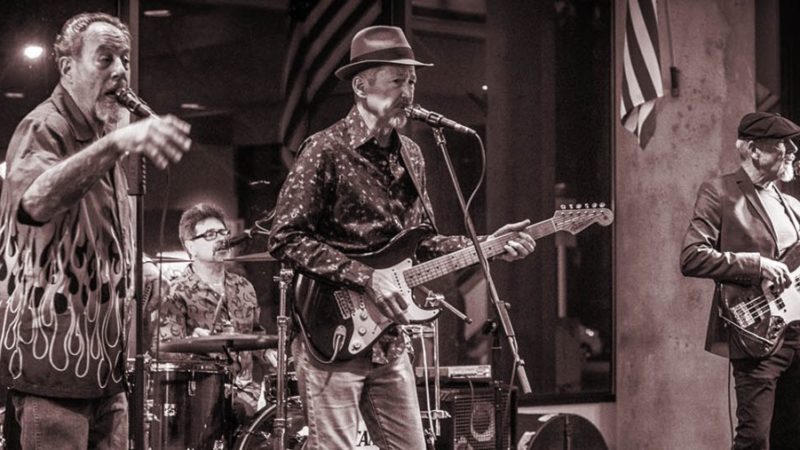
The Nighthawks
What sustains a band for more than three decades? Not a hit radio band, but a roll-up-your-sleeves/drive to the next gig overnight/carry your own gear up the steps and night after night make people happy kind of band. One that makes them dance; sends them home to come back again—and again. What makes that kind band stay together through relatively few personnel changes? Answer: A good idea; a universal yet somehow unique, good idea.
The Nighthawks sought not so much to reinvent rock and roll, but simply to have it reinvent itself by taking the original ingredients and following—if somewhat loosely—the original recipe. And like good cooks, the individual personalities involved ultimately affected the outcome.
The band was over 10 years old and had baffled the mainstream industry before the term “roots rock” was coined to explain the likes of West Coasters like Los Lobos and The Blasters. By then, the affiliation with many of the living blues greats seemed to brand The Nighthawks a “blues band” despite the fact that they played with Carl Perkins as well as Muddy Waters.
The Nighthawks had its genesis when lead singer-harmonica player extraordinaire Mark Wenner returned to his native Washington, D.C. after six years in New York City, lured back by the success of his friend Bobby Radcliff’s local acclaim with a blues band. Mark joined forces with a then very young Jimmy Thackery and formed The Nighthawks in 1972. They spent a couple of years building The Nighthawks’ reputation with a revolving cast of characters until, in 1974, they decided to get the best rhythm section the area had to offer: Jan Zukowski on bass and Pete Ragusa on drums.
The Nighthawks set off on a musical mystery tour that took them to 49 states and a dozen countries. They played with nearly all the living blues legends as well as a new generation of bands, sometimes called “the Blue Wave”, and released several important albums including the best-selling Jacks and Kingswith Pinetop Perkins, Luther “Guitar Junior” Johnson, Calvin Jones and Bob Margolin. (Servern Records 2017)
Could not resist the throwback video..enjoy

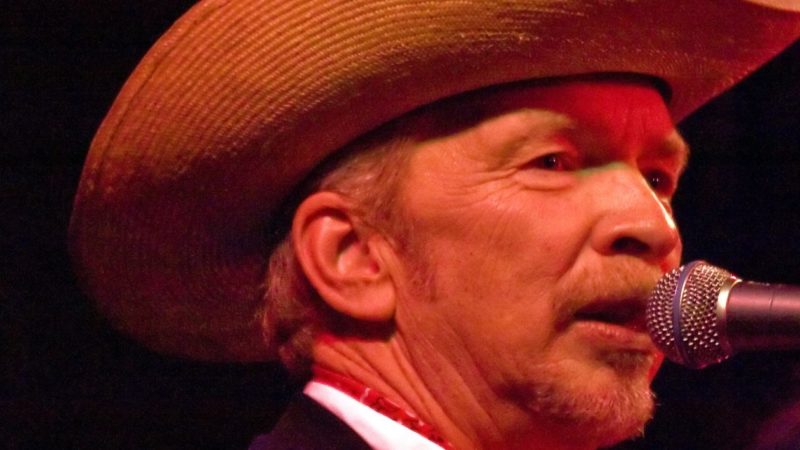
Dave Alvin
David Albert Alvin is an American singer-songwriter, guitarist, music producer and poet. He is a former and founding member of the roots rock band the Blasters. Alvin has recorded and performed as a solo artist since the late 1980s and has been involved in various side projects and collaborations.
These days the touring band is prinarily Dave Alvin & Jimmie Dale Gilmore with The Guilty Ones.
Jimmie Dale Gilmore is a Texan who spent a few formative years in California. Dave Alvin is a Californian who has spent alot of time in Texas. So of course, when the Blaster and the Flatlander began performing together after nearly thirty years of friendship, they leaned into the overlap. The duo’s first album, 2018’s Downey to Lubbock, was named for their respective childhood homes. Now they’re back with Texicali, from Yep Roc Records. (Texas Monthly)
More about Jimmie Dale:
with brother Phil Alvin.

Chris Smither
Chris Smither
William Christopher Smither is an American folk/blues singer, guitarist, and songwriter. His music draws deeply from the blues, American folk music, and modern poets and philosophers. Wikipedia
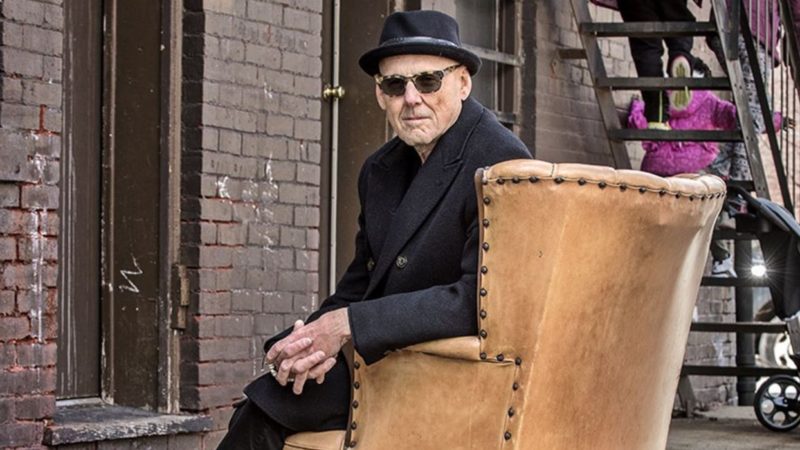
Billy Price
Billy Price
Billy Price is a legendary soul-blues vocalist who has spent over five decades as a cornerstone of the Pittsburgh music scene. He first gained national prominence in the mid-1970s as the lead singer for guitar virtuoso Roy Buchanan, appearing on acclaimed albums like That’s What I’m Here For and the high-energy Live Stock. This early exposure established Price as a premier interpreter of “blue-eyed soul,” a reputation he solidified after forming the Keystone Rhythm Band in 1977. Throughout the 1980s, the group became a regional powerhouse, blending gritty urban blues with the smooth, rhythmic phrasing of Southern soul.
In the years following the Keystone Rhythm Band, Price continued to refine his craft with the Billy Price Band. A career pinnacle arrived in 2016 when he won a Blues Music Award for Best Soul Blues Album for This Time for Real, a collaborative project with his long-time idol, Otis Clay. Price has remained remarkably prolific in his later years, releasing celebrated albums such as Reckoning and Dog Eat Dog, both of which earned further award nominations. His 2024 release, Person of Interest, marked a significant creative milestone as his first collection consisting entirely of original material. Beyond his musical life, Price maintained a long-term professional career in corporate communications at Carnegie Mellon University until 2023. Now fully retired from his “day job,” he continues to tour extensively across the United States and Europe, remaining a vital force in the international blues community.
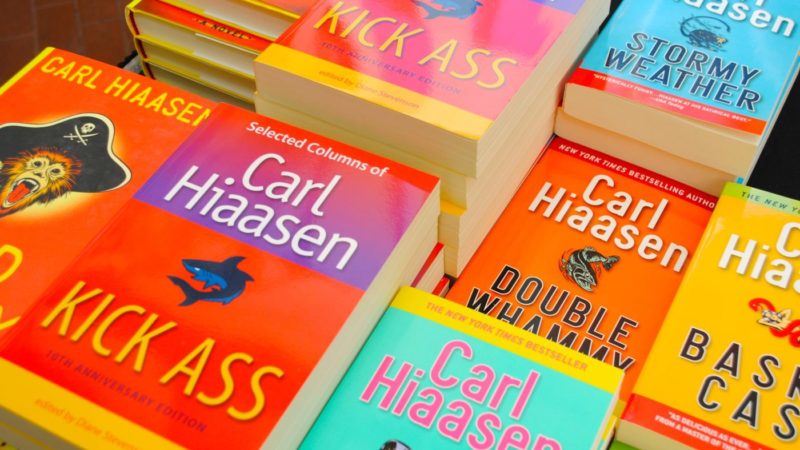
Carl Hiaasen
Locations around Florida
Carl Hiaasen was born and raised in a bizarre place called Florida, where he still lives. His books have been described as savagely funny, riotous, and cathartic. Oddly, they are beloved even by readers who’ve never set foot in the Sunshine State.
A graduate of the University of Florida, at age 23 Hiaasen joined The Miami Herald as a city-desk reporter and went on to work for the newspaper’s weekly magazine and prize-winning investigations team.
From 1985 to 2021 he wrote an opinion column, which at one time or another thrashed just about every major politician in the state – and occasionally his own bosses. One of Hiaasen’s proudest moments came when a Miami City Commissioner who was enraged by the columns introduced a resolution officially denouncing him.
Hiaasen began writing novels in the early 1980s with his good friend and fellow journalist, the late William D. Montalbano. They collaborated on three mystery thrillers – POWDER BURN, TRAP LINE and A DEATH IN CHINA – which borrowed heavily from their reporting experiences. (From his website)
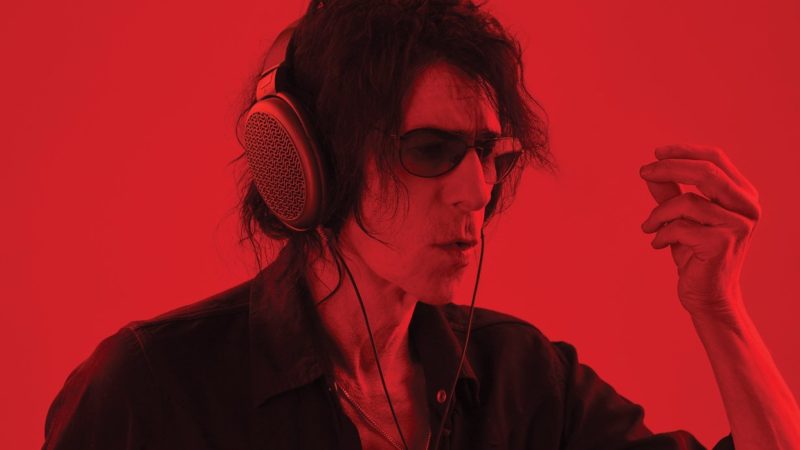
Peter Wolf
A Cure for Loneliness manifests the same vibrant passion for music that’s motivated Peter Wolf for most of his life. Growing up in an artistic, politically engaged family in the Bronx, he became an early rock ‘n’ roll convert after attending an Alan Freed rock ‘n’ roll revue that included performances by Chuck Berry, Buddy Holly, Jerry Lee Lewis, Little Richard and Frankie Lymon. His thirst for new and old sounds drove him to exploring blues, soul, country, folk and jazz, inspiring weekly visits to Harlem’s Apollo Theatre and leading to acquaintances with many of the music’s surviving originators.
Wolf’s talent as a painter won him a grant to study at the Boston Museum School of Fine Arts. While a student there, he experienced a life-changing epiphany after jumping on stage to sing with a blues band at a loft party. He soon talked himself into membership in that band, The Hallucinations.
“I didn’t join a band to meet girls,” Wolf recalls. “I joined my first band to meet musicians. Painting was a fascination for me, but I was a music fanatic, and sitting in with that band was a born-again type of experience for me. I was transfixed, and myself and some of the guys in the band would check out performances by the musicians we admired so much, like Muddy Waters and John Lee Hooker and John Coltrane and Bill Monroe and the Stanley Brothers. Those roots stayed with me.”
Wolf’s natural loquaciousness won him a job as an all-night DJ on the fledgling FM rock station WBCN. Adopting the persona of “the Woofa Goofa,” he spun raw rock ‘n’ roll and rhythm ‘n’ blues, channeling the spirit of the flashy, fast-talking DJs he’d grown up listening to.
Wolf’s encyclopedic musical knowledge came in handy when he and some like-minded Boston players formed the J. Geils Band, much of whose early repertoire was drawn from Wolf’s vast record collection. The band soon became a local favorite injecting a much-needed jolt of raw, uninhibited rock ‘n’ roll into the ’70s scene and was soon signed by Jerry Wexler for Atlantic Records. Between 1970 and 1983, the J. Geils Band released 13 influential albums, topped the pop single charts with 1981’s “Freeze Frame,” “Love Stinks,” “Centerfold,” and earned a reputation as one of rock’s most exciting live acts, thanks in large part to Wolf’s flamboyant, hyperactive stage presence.
After going solo with 1984’s Lights Out, Wolf continued to stake out new musical territory with the subsequent releases Lights Out, Come As You Are, Up to No Good, Long Line, Fool’s Parade, Sleepless and Midnight Souvenirs, and A Cure For Loneliness. His solo work has seen him collaborate with the likes of Aretha Franklin, Merle Haggard, John Lee Hooker, Mick Jagger, Keith Richards, Little Milton, Wilson Pickett, Shelby Lynne and Neko Case. Wolf temporarily reunited with his J. Geils Band cohorts for live shows on several occasions between 1999 and 2015, but his solo career has remained his creative focus, as A Cure for Loneliness makes clear.
