
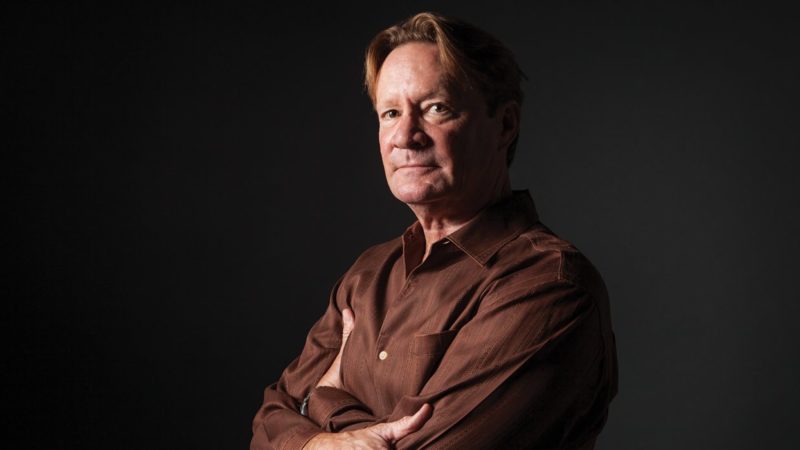
T. Jefferson Parker
Location – San Diego/Southern California
T. Jefferson Parker
T. Jefferson Parker was born in Los Angeles and has lived all his life in Southern California. He was educated in public schools in Orange County, and earned a bachelor’s degree in English from the University of California, Irvine, in 1976.
His writing career began in 1978, with a job as a cub reporter on the weekly newspaper, The Newport Ensign. After covering police, city hall and cultural stories for the Ensign, Parker moved on to the Daily Pilot newspaper, where he won three Orange County Press Club awards for his articles. All the while he was tucking away stories and information that he would use in his first book.


Jimmy Carpenter
Jimmy Carpenter
Jimmy Carpenter is on a roll. For over 40 years Carpenter has plied his trade as Saxophonist, singer-songwriter, and arranger. Having won the 2021 and 2022 Blues Music Award for Best Instrumentalist/Horn, he is nominated again in ’23, his 8th nomination overall. He is also a Grammy-Winning Composer, for a composition he contributed to the New Orleans Nightcrawlers’ winning album, Atmosphere. After many years living and working in New Orleans, Jimmy now resides in Las Vegas, where he serves as Musical Director of The Big Blues Bender.
Praise for The Louisiana Record, Released September 2022 on Gulf Coast Records:
The Louisiana Record is the kind of set that will get your whole neighborhood dancing if played loud enough. Get it and get going! Mike O’Cull, Rock and Blues Muse
“I enjoyed this album from start to finish. Carpenter does a great job on vocals and tenor saxophone throughout and the bands does an exceptional job, too!” Steve Jones, Blues Blast Magazine
“Carpenter’s singing seems to get more soulful with every outing..” Grant Britt, No Depression
“This has really become an album that can really get a party started.” Bluestown, The Netherlands
“Tenor sax man Jimmy Carpenter reminds me of 50s and 60s R&Ber King Curtis, with his big sound grooving through vintage juke box tunes of that period.” George W Harris, JazzWeekly.com
“I have been a Jimmy Carpenter fan for 20 years, from the first time I heard him play with Jimmy Thackery. He’s always been one of the premier sax players around. But Jimmy is also a stellar songwriter and singer. His voice is at its best on ‘Soul Doctor’, Jimmy’s best record to date. This album oozes cool and rocks hard with a classic sound that only Jimmy Carpenter can bring to the table.” — Mike Zito

Eilen Jewell
From: Bernard Zuel – Music Journalist
FULL DISCLOSURE: WHY THE RULES HAVE CHANGED FOR EILEN JEWELL
MAYBE IT’S THE MIDWEST UPBRINGING of politeness and reserve that lay behind it. Maybe it’s the natural defence of someone who already was out and exposed as an artist in a corner of Americana that values the personal as much as the historical. Whatever it might be with Eilen Jewell, in about 13 years of interviewing her, she has always shown herself adept at talking about her songs and her life in a way that deflected personal revelations.
It’s not that she didn’t answer questions, but those answers made the generalities of her characters the focal point and gave just enough to let us see how she’d build relationships to them but not be defined by them. It was politely done of course, and was not without things to chew on given a sharp intelligence and an eye on American culture whether it was her love of Loretta Lyn and Howlin’ Wolf, the pay gap between the sexes, or political resistance as something of a progressive island in a state that’s anything but.
Well, things have changed with the coming record, Get Behind The Wheel. Not only has Jewell written an album that came out of the Covid-era breakup of her marriage to long-time drummer, co-manager, and co-parent, Jason Beek, and some deaths in her wider family, but she has been talking openly, frankly, about her circumstances.
It’s hard to imagine that was a comfortable transition, not least because growing up in Idaho you kept your business to yourself, but you have to wonder if it has been dragged out of her, or did she feel it was inevitable and stopped fighting.
“It is really new for me to talk about anything having to do with my personal life,” the Boise-based Jewell says. “But this time around it seemed like it would be wrong to not discuss it because this album is so, so directly influenced by everything that I’ve gone through in the past couple of years. I just feel like I would be lying if I said ‘oh, I don’t know, it’s just about people and things’ [she laughs].
“Also the pandemic taught me that that there’s something really important about sharing parts of ourselves. That’s what sharing my music is [and] I guess it dawned on me this actually could be a good thing for me, it could open me up to my fans and there’s a chance there could be some cathartic sharing on both sides.”
There probably won’t be any problems getting her fans to share their thoughts next month when she will spend several weeks in Australia (heaven knows we’re not a quiet bunch), but when you put these things out like Jewell is now doing, not only are you exposing yourself but you are setting the agenda for how things are interpreted. And this is before even considering that Beek is still playing in her band and will be on the tour.
How people interpret your songs and your album, and inevitably yourself, will be shaped by these revelations and explanations. Is that a good thing? Was it even planned?
“The label was saying you’ve got to figure out how to talk about this new album, so I was like, yeah, shoot, I’ve gotta decide how much do I want to disclose? How much do I want to set the stage for these songs?,” she says. “Because, yeah, in the past I’ve not done that and thought that the songs should stand on their own and people can interpret them how they want. People are still free to interpret them however, obviously, but this album really did occur at a particular point in time for me. It was a disaster of a moment in my life this album was born out of, beyond anything else I’ve ever experienced, and I felt this album deserved an exception to my normal rule.” It was time? At 43, maybe it’s as simple as that.
“I guess I do want to talk about this stuff, this stuff being the pandemic, the divorce that came out of that, or coincided with it, and then family losses, people near and dear to me – not even Covid-related, but just one after another,” Jewell says. “For the first time in my life it feels cathartic to talk about what was going on behind the scenes. I don’t think it’s necessary information to appreciate the album, but there’s a few Neil Young albums where I gleaned he was going through a particular thing in his life and then read later that in fact, yes that’s happening, and something about that makes me appreciate the album just a little bit more. I have a sense of who he is more.”
From a long low base of knowledge about the album so far – it’s not yet available to media, let alone the public, though we will hear some songs from it at her March shows – a title like Get Behind The Wheel suggests maybe taking control of her life, or at least setting the direction. How did she handle this resetting and reclaiming of control?
“It’s really been a mixed bag,” she confesses. “I think when I wrote that song – the song that contains that phrase ‘get behind the wheel’ is called Alive – I felt so inspired to take control and have agency, it was all very new. I was like, well, so much is crashing down around me but this is an opportunity to just up inside my life in a really authentic way. And that’s still present, but I’m also realising that it’s much harder than it sounds, and sometimes [she laughs ruefully] it’s awful.” No one would blame her for looking away.
“There’s part of me that would just love to drift around and say ‘I don’t know, someone else take the wheel: I’m getting tired already’,” says Jewell. “But I was guilty of some of that for many years, going with the flow with my career, and my personal life too … being cooperative, and they really comes at a cost eventually. You can’t keep whittling your life away like that. Eventually you realise that your heart is not fully in it, and there’s always a reckoning with that.” When she looks at who she was, even three years ago, and who she is now, how does she judge that person?
“I … think … that … person … was … somewhat,” she says slowly, before a long pause. “Somewhat overeager to find distractions. The old me really didn’t want to look at life just as it is. The old me was always kind of looking into the future, thinking about how things will be better or should be better, or the past. The here and now was something that I tended to avoid. “But all we really have is the here and now. The past is gone and the future is a fantasy.”

Robyn Carr
Robyn Carr
Virgin River – on Netflix
Robyn Carr is a RITA® Award-winning, eleven-time #1 New York Times bestselling author of almost sixty novels, including the critically acclaimed Virgin River series. The fourth novel, THE BEST OF US, in her fan-favorite Sullivan’s Crossing Series was released in Jan. 2019. Robyn’s new women’s fiction novel THE VIEW FROM ALAMEDA ISLAND, released in April 2019, deputed on four bestseller lists: The New York Times, USA Today, The Wall Street Journal and Publisher’s Weekly! Robyn is a recipient of the Romance Writers of America Nora Roberts Lifetime Achievement Award 2016, and in 2017, VIRGIN RIVER was named one of the HarperCollins 200 Iconic Books of the past 200 years. The Virgin River Netflix Series season 2 is now streaming on Netflix (Nov. 2020) with season 3 amd more coming soon. Robyn currently resides in Las Vegas, Nevada.

Leftover Salmon
Leftover Salmon
For the past quarter-century, Colorado’s Leftover Salmon has established itself as one of the great purveyors of Americana music, digging deep into the well that supplies its influences; rock ‘n’ roll, folk, bluegrass, Cajun, soul, zydeco, jazz and blues. During their twenty-five plus years as a band they have headlined shows and festivals from coast to coast, released nine albums, and maintained a vibrant, relevant and influential voice in the music world. The evolution of Leftover Salmon’s music is influenced by Leftover Salmon co-founders Drew Emmitt (mandolin/vocals) and Vince Herman‘s (guitar/singer) keen musical instincts, and follows a musical path that adheres to the deep tradition the duo started when they first formed the group along with deceased banjo player Mark Vann. The addition of new band members over the years has nurtured an unmistakable evolution and freshness in Leftover Salmon’s sound, and has added an edge to the long-lasting power of the band’s music. (youtube)
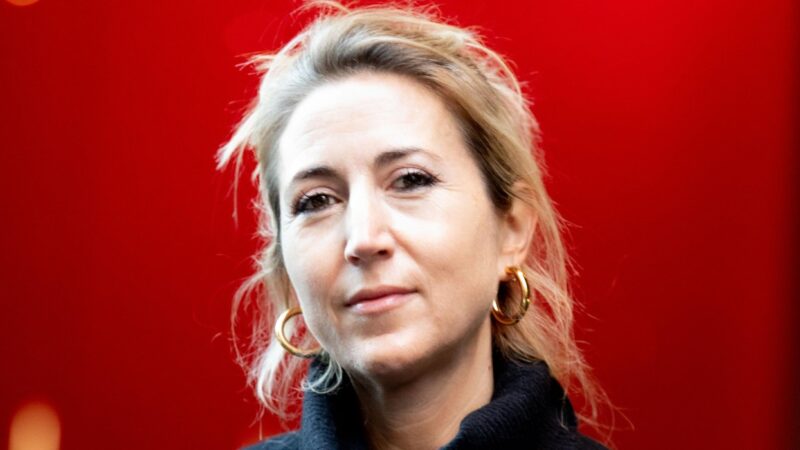
Lisa Jewell
From: goodreads.com
Her first novel, Ralph’s Party, was the best- selling debut novel of 1999. Since then she has written another twenty novels, most recently a number of dark psychological thrillers, including The Girls, Then She Was Gone, The Family Upstairs and The Night She Disappeared. Lisa is a New York Times and Sunday Times number one bestselling author who has been published worldwide in over twenty-five languages. She lives in north London with her husband, two teenage daughters and the best dog in the world.
From: Publishers Weekly
Lisa Jewell Raced Through Writing Her Latest Novel
“I love to write thrillers about creeps and coercive controllers, and about letting the wrong person in,” Lisa Jewell says via Zoom from the sun-dappled bedroom of her London home, which is packed with books and looks out onto a leafy communal garden. “You can literally wake up one morning, meet someone, and let them into your life, and that can be enough to destroy everything. With thrillers, there’s so much to play with. So many emotions to investigate, so many secrets to uncover.”
Jewell’s novels, which include romantic and family dramas and psychological thrillers, can feel like hornets’ nests pulsing with secrets. The 54-year-old has written 21 page-turners that have sold more than 10 million copies worldwide over the past 30 years and been translated into 29 languages, according to her publisher, Atria. Her next, None of This Is True, out in August, follows a successful podcaster in search of her next project who meets an odd, mousy woman at a restaurant and, at the woman’s suggestion, agrees to interview her for her podcast. The podcaster then discovers that behind the woman’s meek facade is a dangerous character with control issues—who may be trying to dismantle the podcaster’s life.
t took Jewell five months to write None of This Is True—it’s the fastest she’s ever written a novel. “There’s something terrifying about working that quickly,” she says. “I felt slightly out of control.” The idea for the book came to her last January while she was out walking her dog. “I saw a man sitting at the window, working on his laptop, minding his own business, and couldn’t get rid of this feeling that there was something dark going on, that there was some dysfunctional atmosphere there. I wanted to focus on this stranger and find out what could be happening behind him. The front door is a huge thing for a writer. To breach that door and see how people behave when nobody’s watching, that’s fundamental to writing.”
Jonny Geller, Jewell’s agent at Curtis Brown, praises Jewell for her ability to get into the heads of her characters and build rich worlds around them. “Lisa understands that characters come first and that you sort out your plot twists after,” Geller says. “She doesn’t plan out her books. I’ve thought, there’s no way you’re not planning those twists—but she doesn’t. She’s at the peak of her craft, and she’s always hungry for new stories.”
Born in North London, Jewell was a painfully shy kid—nothing like the confident author fans meet at book events today. “I had pigeon toes and a terrible blushing problem,” she recalls. “I would turn this brilliant red at the suggestion that anyone was about to talk to me. I could never just throw myself into anything. My mother says I was always on the edge looking in.”
As a young woman Jewell was “desperate to settle down” and feel grown up. After earning a diploma in fashion communication and promotion from Epsom School of Art & Design (“I had no clue what I was doing and where I was going,” she says), she married an emotionally abusive man. “He love-bombed me and proposed after three months, and the minute I agreed to spend my life with him the abuse started,” she continues. “He threw out my photos and diaries. He told me I was bad at sex. I wasn’t allowed a front door key. He chose what we were going to eat and watch. There’s no sunshine when you’re living like that. I’m still confused by how I let it happen.”
When that toxic marriage ended after five years, in 1996, Jewell set out to reinvent herself. She began dating her current husband—they’ve been together for over two decades and share two daughters—and, after getting laid off from her job as a secretary, started working on a novel at the suggestion of a friend who promised to buy her dinner if she could write three chapters. That novel became Ralph’s Party, a rom-com released in 1999 after Bridget Jones’s Diary ushered in the chick lit age. “It was the right book at the right time,” Jewell says. “London publishers wanted to snap up as many young female writers as they could. Had there not been that zeitgeisty thing going on, I might have missed my moment.”
As Jewell’s readership expanded in the 2000s, she began to focus less on romance and more on the dark sides of human nature—and she used her first marriage as source material. “I’m constantly drawn back to writing about coercive controllers,” she reveals. “My first marriage was probably the most interesting thing that’s happened to me—in the bleakest, most gothic way imaginable. It’s character building for a writer.”
“Lisa’s stories come from a place deep within her,” says Atria publisher Libby McGuire. “They come from an interest in exploring women, men, and control. She’s a number one bestseller and her profile is building, and that’s what I find most heartening. She’s on the cusp of being that big brand-name author that so many strive to become.”
Sophie Kinsella, author of the bestselling Shopaholic series, has been friends with Jewell for more than 20 years and chats with her often about life and work. “Lisa’s writing has changed over the years,” Kinsella says. “I love the thrillers she writes now. Lisa knows exactly how to play the reader, what details to drop in and when, and she creates such compelling characters that you want to follow their stories, whatever happens. I’m so proud of her.”
When Jewell isn’t writing, she’s spending time with friends and family, especially her daughters, who bring her boundless joy. “I love living with teenage girls,” Jewell muses. “I love their sass and potty mouths. I love their mess and wet towels. I love driving them places and fixing meals. I like looking after teenagers in a way I never liked looking after children. I’m not a fan of babies. Toddlers do my brain in. Whereas with teenagers, I’m in my element.”
Clearly Jewell has hit her stride—as a parent and a novelist. “I’ve found myself in a position where, by any reasonable measure, I’m comfortable now and could actually stop writing,” she says. “Truly it’s nothing to do with money. I just have to do something with these feelings I get, where people jump out of the street and get in my head, or I see a house and want to walk into it and find out who lives there. I need to use these weird things and make something out of them. With every book I publish, it seems like an extreme privilege. I’m not sure what the secret is. I’m just following my instincts.”
Elaine Szewczyk’s writing has appeared in McSweeney’s and other publications. She’s the author of the novel I’m with Stupid.
A version of this article appeared in the 07/03/2023 issue of Publishers Weekly under the headline: Stranger Danger
