Sort by Shares Per Month

Harlan Coben

Harlan Coben

An author we’ve followed over past 25 years, now more than somewhat famous. Well deserved. Early work includes the Myron Bolitar series which is great to read in order. Coben’s stand-alones have garnered bestseller attention. Check him out.

Why & How You Should Support Artists During COVID


It’s time to support artists

The music industry and local musical artists have had to navigate their careers differently since the Covid-19 lockdown. It’s very important for us as consumers to continue to support our favorite music artists, especially during the Covid-19 pandemic. People throughout the United States are struggling during this time. Millions of people are unemployed and are unable to return to work. Thousands of businesses have shut down and even music artists are having trouble making money during this time. Music artists are unable to make money while on a tour which is greatly affecting their ability to earn income. Many bands and hip-hop artists have pointed out in the past that the majority of the money they make is on tour. Even indie artists make a large portion of here money touring local areas to keep the band going. Consumers should try to support their favorite artists so they can stay intact. Artists are unable to have in-person events and signings which can be so exciting and beneficial to the artist. Spotify and streaming services do not pay artists large amounts of money. In 2020 physical albums are almost non-existent and most music is available for free. Roaming the Arts has an online community that supports musicians, artists, and writers. Now is the time for consumers to stand up and support artists during this difficult time!


Ways to Support Artists During Covid


  • Branding and promotion can be so beneficial to musical artists. Spreading your favorite artist’s music on social media can be so helpful to them. Retweets and posts on Instagram can during this time will e greatly appreciated.
  • You can share music and resources within your circle of friends
  • Encourage your friends to support their favorite artists. Buy and stream most as often as you can.
  • Tweet and reach out to your favorite artists and tell them how much you love and appreciate their music. Bands and rappers need to know their fans still want them to keep releasing must and that they will be first in line to buy their tickets once they can go on tour again. If you are employed or cannot work it’s fully understandable if you cannot financially support your favorite artists. The smallest things such as a tweet or direct message will always be appreciated. This can potentially help boost sales.
  • Music streaming sites don’t pay large amounts of money but they still make up nearly 20% of an artist’s income. If you consumers can accumulate enough stream it definitely can be beneficial to an artist. Streaming sites are even introducing tipping options. If you would like to you can support artists by sending them money directly. Establishing more revenue flow can be so helpful to struggling indie artists.
  • Many artists have YouTube channels and live streams where you can come support them I’ve seen many artists focus more on making content and releasing music on youtube to make a living.
  • It’s time to support artists!!!


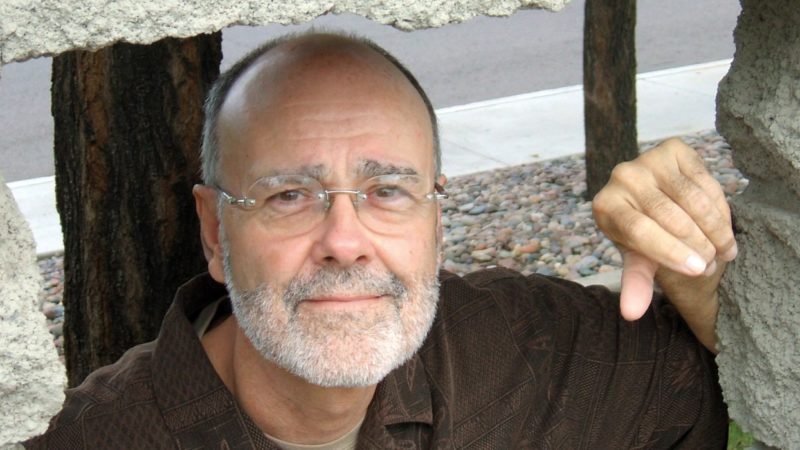
Michael Oberman

Michael Oberman

Author and Photographer

Michael Oberman’s photographs are on permanent display in U.S. National Parks including Steigerwald and Modoc and in museums including the Utah Museum of Natural History and the Ontario Science Centre (Toronto).

Six photos are on a five year tour of U.S. and Canadian museums in an exhibit called “Imaginate”…under the auspices of the Ontario Science Centre in Toronto (where the same six photos are on permanent display).

Before photography, he spent his life in the “music business.”  Michael started as a music columnist for the Washington Star and a six year period interviewed more than 300 major recording artists…including David Bowie, Janis Joplin, Jim Morrison, James Brown…the list is too long for this page.  He later worked for a record company and managed artists.  Now he is back to his true love: Photography.

In 2019, Oberman was signed to a publishing contract for a book about his life in the music business.  He spent eight months writing “Fast Forward, Play, and Rewind.”  It will be out on October 15, 2020 in the U.S. and December 1 in Great Britain. (adapted from web site)


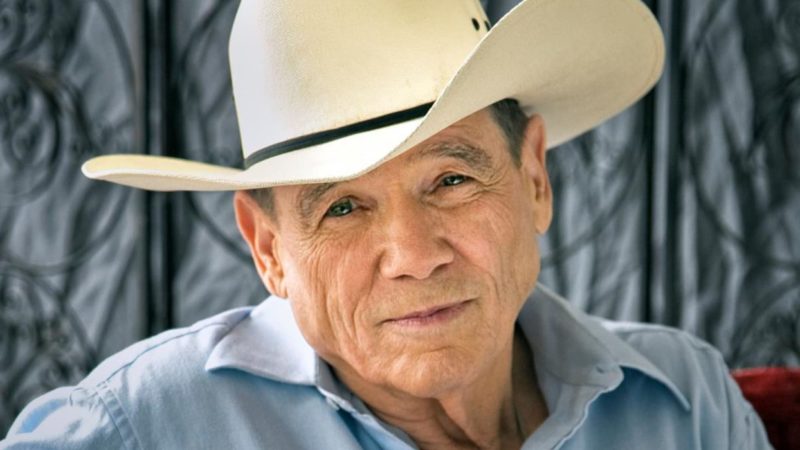
Paul Thorn

Paul Thorn

Paul Thorn is a singular figure in American music, blending the grit of a former professional boxer with the soul of a Mississippi songwriter. Born in Tupelo and raised as the son of a Pentecostal preacher, Thorn’s upbringing in the church—and later, his time spent in his uncle’s pimp-turned-prodigal-son circle—provided him with a rich tapestry of characters and moral complexities that define his work. His music is a unique fusion of Americana, blues, rock, and gospel, often delivered with a sharp, self-deprecating wit.
 

Before finding success in the music industry, Thorn made headlines in the ring, most notably for his 1988 televised bout against world champion Roberto Durán. Though he didn’t win, that same tenacity carried over to his songwriting. He is celebrated for his storytelling, capturing the struggles and small victories of everyday people in songs like “800 Pound Jesus” and “I Don’t Like Half the Folks I Love.” His career is a testament to authenticity, reflecting a man who has lived through sin and salvation alike, consistently offering a “softer touch” to life’s rougher patches.


See many great videos linked on his website. 

For “relationship smiles,” watch these favorites: “Just Stay Married” and “Temporarily Forever.”


William Landay

William Landay

Latest work has arrived in 2023 – All That Is Mine I Carry With Me.


A tale about family — family secrets and vengeance, but also family love — All That Is Mine I Carry With Me masterfully grapples with a primal question: When does loyalty reach its limit?

After reading this book, not only can I say it is an engaging, hard to put down, story, but it takes a very unusual approach in the telling. Not the usual thriller/crime novel format by any means. Highly recommed.-ed.

William Landay’s previous novel is the New York Times bestseller Defending Jacob. His previous novels are Mission Flats, which won the Dagger Award as best debut crime novel of 2003, and The Strangler, which was an L.A. Times favorite crime novel and was nominated for the Strand Magazine Critics Award as best crime novel of 2007.

Defending Jacob is also a film available on AppleTV.


Tom Perrotta

Tom Perrotta is often hailed as the “American Chekhov” of the suburbs, a writer who has spent over three decades dissecting the quiet desperation, suburban ennui, and darkly comic absurdities of middle-class life. Born in 1961 in Newark, New Jersey, Perrotta’s perspective was shaped by his upbringing as the son of a postal worker. This background instilled in him a “down-to-earth, egalitarian” literary voice that treats everyday struggles with the gravity typically reserved for epic drama.

Perrotta’s ascent into the literary mainstream was fueled by his uncanny ability to turn local settings into universal metaphors. His breakout novel, Election (1998), utilized a high school student council race to satirize the broader American political landscape. The introduction of Tracy Flick—a character defined by relentless, terrifying ambition—created a permanent cultural archetype, further cemented by Alexander Payne’s iconic film adaptation. He followed this success with Little Children (2004), a novel that transformed the mundane world of playgrounds and neighborhood pools into a psychological battlefield. By exploring the secret lives and unfulfilled desires of stay-at-home parents, Perrotta exposed the “Dante’s Inferno” hiding behind manicured lawns. The book solidified his reputation for writing with a “crisp and light” style that never shies away from moral complexity.
 
While realism was his initial forte, Perrotta took a daring thematic turn with The Leftovers (2011). Using a “pseudo-Rapture” as a catalyst, he shifted his focus toward communal grief and the search for meaning in an indifferent universe. The novel’s adaptation into a celebrated HBO series, which Perrotta co-created, marked a major evolution in his career. He became a rare “writer’s writer” who successfully navigated the worlds of prestige television and literary fiction, a trend he continued with the 2019 adaptation of his novel Mrs. Fletcher.
 
Perrotta’s prose is characterized by its lack of judgment. Whether his characters are struggling with sexual identity, religious zealotry, or professional failure, he presents them with a compassionate clarity. He draws heavy inspiration from his former teacher, Tobias Wolff, and the disciplined storytelling of Raymond Chandler. Like his father’s commitment to his mail route, Perrotta maintains a rigorous work ethic, viewing his writing as a way to process subconscious material that holds deep personal and social significance.
 
In his most recent works, Perrotta has explored the complexities of aging and the weight of the past. Tracy Flick Can’t Win (2022) revisited his most famous character in middle age, finding her still fighting for a seat at the table. His 2026 novel, Ghost Town, marks another shift toward a “pared down” and essential style, focusing on abandonment and the lingering presence of those we have lost. Living in Belmont, Massachusetts, Perrotta remains a vital voice in American letters, consistently proving that there is nothing “small” about suburban life. His legacy is defined by a body of work that finds original and beautiful truths in the most ordinary of places.
 
Scroll to top