
Location – Northern Michigan
Aaron Stander
Aaron Stander is an American novelist of mystery/thriller novels. He is the author of the Ray Elkins series. Before becoming a published author, Stander worked as an English teacher and training writing teachers in the Detroit area.

-
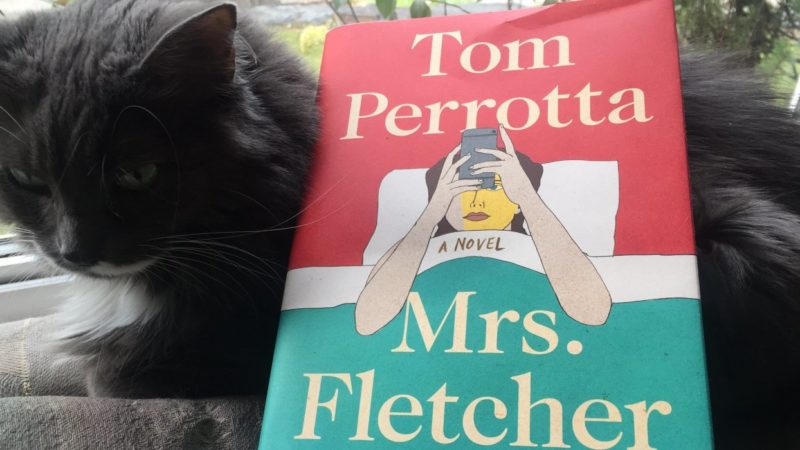
Tom Perrotta
Tom Perrotta is often hailed as the “American Chekhov” of the suburbs, a writer who has spent over three decades dissecting the quiet desperation, suburban ennui, and darkly comic absurdities of middle-class life. Born in 1961 in Newark, New Jersey, Perrotta’s perspective was shaped by his upbringing as the son of a postal worker. This background instilled in him a “down-to-earth, egalitarian” literary voice that treats everyday struggles with the gravity typically reserved for epic drama.
Perrotta’s ascent into the literary mainstream was fueled by his uncanny ability to turn local settings into universal metaphors. His breakout novel, Election (1998), utilized a high school student council race to satirize the broader American political landscape. The introduction of Tracy Flick—a character defined by relentless, terrifying ambition—created a permanent cultural archetype, further cemented by Alexander Payne’s iconic film adaptation. He followed this success with Little Children (2004), a novel that transformed the mundane world of playgrounds and neighborhood pools into a psychological battlefield. By exploring the secret lives and unfulfilled desires of stay-at-home parents, Perrotta exposed the “Dante’s Inferno” hiding behind manicured lawns. The book solidified his reputation for writing with a “crisp and light” style that never shies away from moral complexity.While realism was his initial forte, Perrotta took a daring thematic turn with The Leftovers (2011). Using a “pseudo-Rapture” as a catalyst, he shifted his focus toward communal grief and the search for meaning in an indifferent universe. The novel’s adaptation into a celebrated HBO series, which Perrotta co-created, marked a major evolution in his career. He became a rare “writer’s writer” who successfully navigated the worlds of prestige television and literary fiction, a trend he continued with the 2019 adaptation of his novel Mrs. Fletcher.Perrotta’s prose is characterized by its lack of judgment. Whether his characters are struggling with sexual identity, religious zealotry, or professional failure, he presents them with a compassionate clarity. He draws heavy inspiration from his former teacher, Tobias Wolff, and the disciplined storytelling of Raymond Chandler. Like his father’s commitment to his mail route, Perrotta maintains a rigorous work ethic, viewing his writing as a way to process subconscious material that holds deep personal and social significance.In his most recent works, Perrotta has explored the complexities of aging and the weight of the past. Tracy Flick Can’t Win (2022) revisited his most famous character in middle age, finding her still fighting for a seat at the table. His 2026 novel, Ghost Town, marks another shift toward a “pared down” and essential style, focusing on abandonment and the lingering presence of those we have lost. Living in Belmont, Massachusetts, Perrotta remains a vital voice in American letters, consistently proving that there is nothing “small” about suburban life. His legacy is defined by a body of work that finds original and beautiful truths in the most ordinary of places. -

David Mitchell
David Mitchell
Location – London (Soho) and around the world.
Check out the 2012 film version of Cloud Atlas on Netflix.
Extended Interview – w/ Neil Gaiman @ virtual Politics & Prose Bookstore
David Mitchell was born in Southport, Merseyside, in England, raised in Malvern, Worcestershire, and educated at the University of Kent, studying for a degree in English and American Literature followed by an M.A. in Comparative Literature. He lived for a year in Sicily, then moved to Hiroshima, Japan, where he taught English to technical students for eight years, before returning to England. After another stint in Japan, he currently lives in Ireland with his wife Keiko and their two children. In an essay for Random House, Mitchell wrote: “I knew I wanted to be a writer since I was a kid, but until I came to Japan to live in 1994 I was too easily distracted to do much about it. I would probably have become a writer wherever I lived, but would I have become the same writer if I’d spent the last 6 years in London, or Cape Town, or Moose Jaw, on an oil rig or in the circus? This is my answer to myself.” Mitchell’s first novel, Ghostwritten (1999), moves around the globe, from Okinawa to Mongolia to pre-Millennial New York City, as nine narrators tell stories that interlock and intersect. The novel won the John Llewellyn Rhys Prize (for best work of British literature written by an author under 35) and was shortlisted for the Guardian First Book Award. His two subsequent novels, number9dream (2001) and Cloud Atlas (2004), were both shortlisted for the Man Booker Prize. In 2003, he was selected as one of Granta’s Best of Young British Novelists. In 2007, Mitchell was listed among Time Magazine’s 100 Most Influential People in The World. Mitchell’s American editor at Random House is novelist David Ebershoff. (Goodreads)
His latest novel (July 2020) Utopia Avenue tells the fictional story of a British band of the same name, who emerged from London’s psychedelic scene in 1967, against the backdrop of real world characters and events.
Check it out on Goodreads (Click cover below)

-

Joe Rothstein
Joe Rothstein – Author and Political Strategist
“Must read political thriller of 2022”
In his words:
Can democratic government provide the answers? That’s the question at the core of “Menace.”
Three decades ago, a meeting at Kyoto, Japan confirmed the threat of a warming planet and produced a plan for dealing with it. Three decades later, with unprecedented heat, fire, storm, flood, drought, and climate-related migration accelerating even beyond the Kyoto forecasts, governments still have not responded in a manner equal to the threat.Eight decades ago, atomic bombs were used in warfare. The danger of their use again has not receded. More nations have them stockpiled. Delivery systems remain trigger-ready, and with delivery speeds now approaching hypersonic levels.
Even a technology seemingly as benign as the Internet has been transformed into the beating heart of political turmoil and repression.
I wrote The Moment of Menace and its prequel, The Salvation Project to imagine these threats in the context of fiction. But the question addressed is our reality. How does democracy survive in this age of advanced science?
The irony is that aside from nuclear weapons, much of what is being created can contribute to a golden age—a better life for all who come after us. Far from being bleak, the future can be glorious. Can it be both glorious and remain the democratic system most of us cherish? That’s the question The Moment of Menace addresses.
