

Phillip Margolin
Location – Oregon
Phillip Margolin
A great collection of legal thrillers written over a span of forty years.

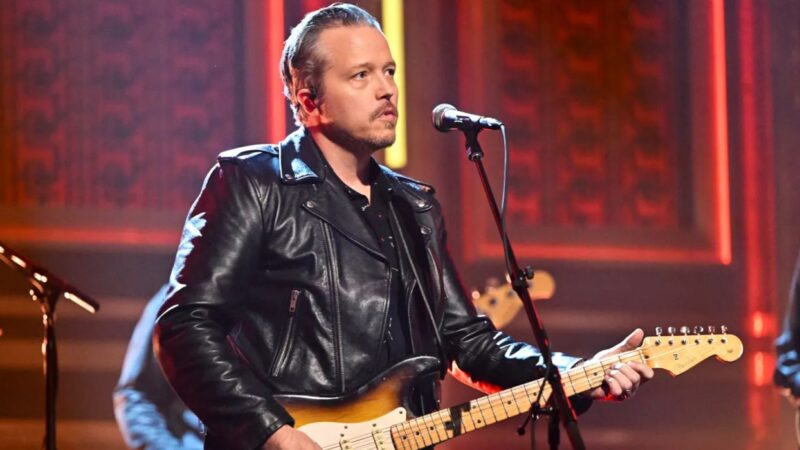
Jason Isbell
Jason Isbell
Jason Isbell was married to Amanda Shires. (Click to visit her site) They were part of each other’s bands and often appeared on record together.
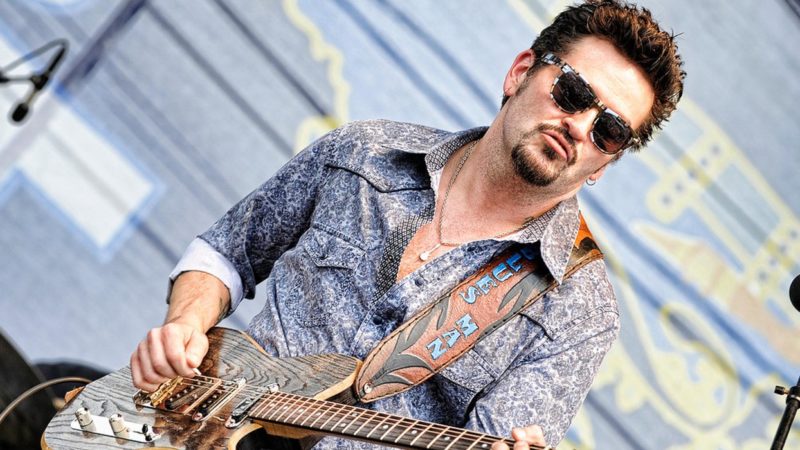
Mike Zito
Mike Zito
He may be one of the most lauded artists in the contemporary blues arena today, and rightfully so, but for Mike Zito, the thing that counts the most is maintaining his honesty, authenticity and integrity. Those are the qualities that have steered Zito’s career since the beginning and continue to define every effort he’s offered since.
“I have nothing to hide; it seems my honesty is what people relate to most,” he once told Vintage Guitar magazine. “Anders (Osborne) told me early on, ‘If you don’t believe what you’re singing, you’ll never be a good singer.’ I try not to write fluff; I try to make every word count.”
That point became convincingly clear with his last record 2018’s First Class Life, a collection of songs that detailed his journey from addiction to sobriety and the subsequent success he achieved through his award-winning body of work. A multiple award winner and nominee, Zito has built his career on an ability to tap into tradition while maintaining contemporary credence all at the same time.
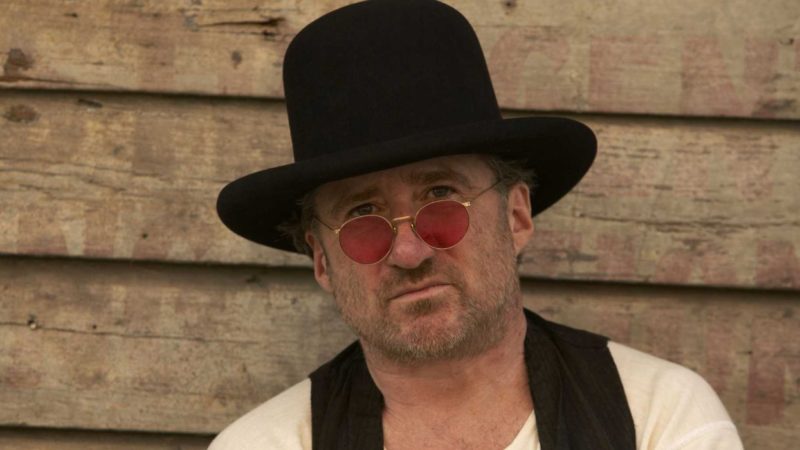
Jon Cleary
Jon Cleary’s love and affinity for New Orleans music goes back to the rural British village of Cranbrook, Kent, where he was raised in a musical family. Cleary’s maternal grandparents performed in London in the 1940s, under the respective stage names Sweet Dolly Daydream and Frank Neville, The Little Fellow With The Educated Feet – she as a singer, and he as a crooner and tap dancer.
As a teen Cleary grew increasingly interested in funk-infused music and discovered that three such songs that he particularly admired – LaBelle’s “Lady Marmalade,” Robert Palmer’s version of “Sneakin’ Sally Through the Alley,” and Frankie Miller’s rendition of “Brickyard Blues” – were attributed to Allen Toussaint as either the songwriter, the producer, or both. Cleary’s knowledge of Toussaint’s work expanded significantly when his uncle returned home to the U.K., after a two-year sojourn in New Orleans, with a copy of a Toussaint LP and two suitcases full of New Orleans R&B 45s.
In 1981 Cleary flew to New Orleans for an initial pilgrimage and took a cab straight from the airport to the Maple Leaf Bar, a storied venue which then featured such great blues-rooted eclectic pianists as Roosevelt Sykes and James Booker. Cleary first worked at the Maple Leaf as a painter, but soon graduated to playing piano there – even though his first instrument was the guitar, which he still plays and has recently reintroduced into his live performances.
As word of Cleary’s burgeoning talent began to spread around town, he was hired by such New Orleans R&B legends as Snooks Eaglin, Earl “Trick Bag” King, Johnny Adams, and Jessie “Ooh Poo Pah Doo” Hill, while also gaining the respect of the great Crescent City pianists Dr. John and the late Allen Toussaint. Years later, in 2012, Cleary recorded a critically acclaimed album of all-Toussaint songs entitled Occapella.
Today, Cleary’s work pays obvious homage to the classic Crescent City keyboard repertoire created by such icons as Jelly Roll Morton, Fats Domino, Professor Longhair, Art Neville, Dr. John, and James Booker – while also using it as a launching pad for a style that incorporates such other diverse influences as ’70s soul and R&B, gospel music, funk, Afro-Caribbean and Afro-Cuban rhythms, and much more.
Deciding to stay in New Orleans, Cleary recorded his first album of nine, to date, in 1989. His ever-elevating profile led to global touring work in the bands of Taj Mahal, John Scofield, Dr. John, and Bonnie Raitt. Cleary has led his own group, the Absolute Monster Gentlemen, for over two decades now, but he still collaborates frequently with these old friends. At the 2018 New Orleans Jazz & Heritage Festival, for instance, Cleary performed alongside Raitt in a heartfelt tribute to Fats Domino.

Albert Castiglia
Albert Castiglia
“It may be a bit premature to crown Albert Castiglia America’s newest King of the Blues, but there’s little doubt that he at least deserves the title of heir apparent.” — Miami New Times
As most artists will attest, the most unexpected circumstance can spark artistic inspiration. That’s a fact that hasn’t been lost on singer, songwriter and guitarist extraordinaire Albert Castiglia. With his latest album, the aptly named Masterpiece, he celebrates an unforeseen triumph — a connection with a daughter he never knew he had. The result is a work that’s both personal and provocative all at the same time.
Castiglia calls this the most meaningful album he’s ever made. “My daughter finding me and opening up my world to an additional family, including two grandchildren, brought out the deepest material I’ve ever created,” he notes, “along with my wife, they were my muses.” Indeed, songs such as “Keep On Swinging”, “Masterpiece” and “Bring on the Rain” address the unexpected emotions that infused his psyche with the discovery of a family he never knew.
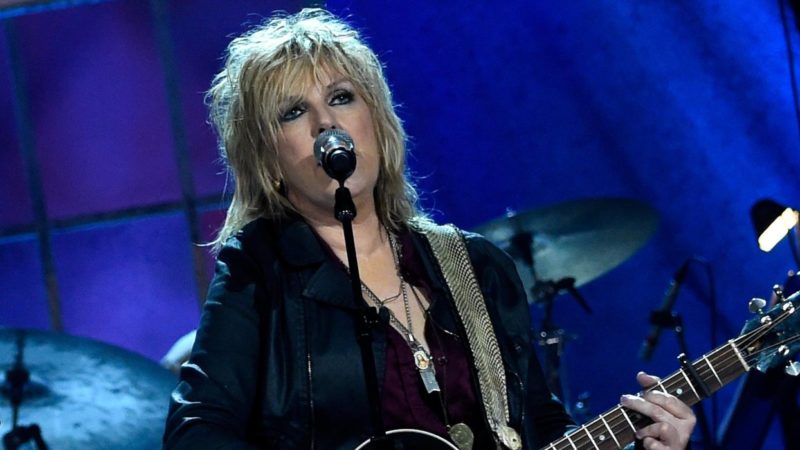
Lucinda Williams
Three-time Grammy Award winner, Lucinda Williams has been carving her own path for more than three decades now. Born in Lake Charles, Louisiana, Williams had been imbued with a “culturally rich, economically poor” worldview. Several years of playing the hardscrabble clubs gave her a solid enough footing to record a self-titled album that would become a touchstone for the embryonic Americana movement – helping launch a thousand musical ships along the way.
While not a huge commercial success at the time Lucinda Williams (aka, the Rough Trade album) retained a cult reputation, and finally got the reception it deserved upon its reissue in 2014. Jim Farber of New York’s Daily News hailed the reissue by saying “Listening again proves it to be that rarest of beasts: a perfect work. There’s not a chord, lyric, beat or inflection that doesn’t pull at the heart or make it soar.”
For much of the next decade, Williams moved around the country, stopping in Austin, Los Angeles, Nashville, and turning out work that won immense respect within the industry (winning a Grammy for Mary Chapin Carpenter’s version of “Passionate Kisses”) and a gradually growing cult audience. While her recorded output was sparse for a time, the work that emerged was invariably hailed for its indelible impressionism — like 1998’s Car Wheels on a Gravel Road, which notched her first Grammy as a performer.
The past decade brought further development, both musically and personally, evidenced on albums like West (2007), which All Music Guide called “flawless…destined to become a classic” and Blessed (2011), which the Los Angeles Times dubbed “a dynamic, human, album, one that’s easy to fall in love with.” Those albums retained much of Williams’ trademark melancholy and southern Gothic starkness, but also exuded more rays of light and hope. This all lead to the 2014 release of Williams’ first double studio album Down Where The Spirit Meets The Bone. The album received overwhelming praise from the media and fans, thus proving that Williams’ songwriting is as strong and important as it has ever been.
